Browse our comprehensive product guides and documentation



Summarize with AI



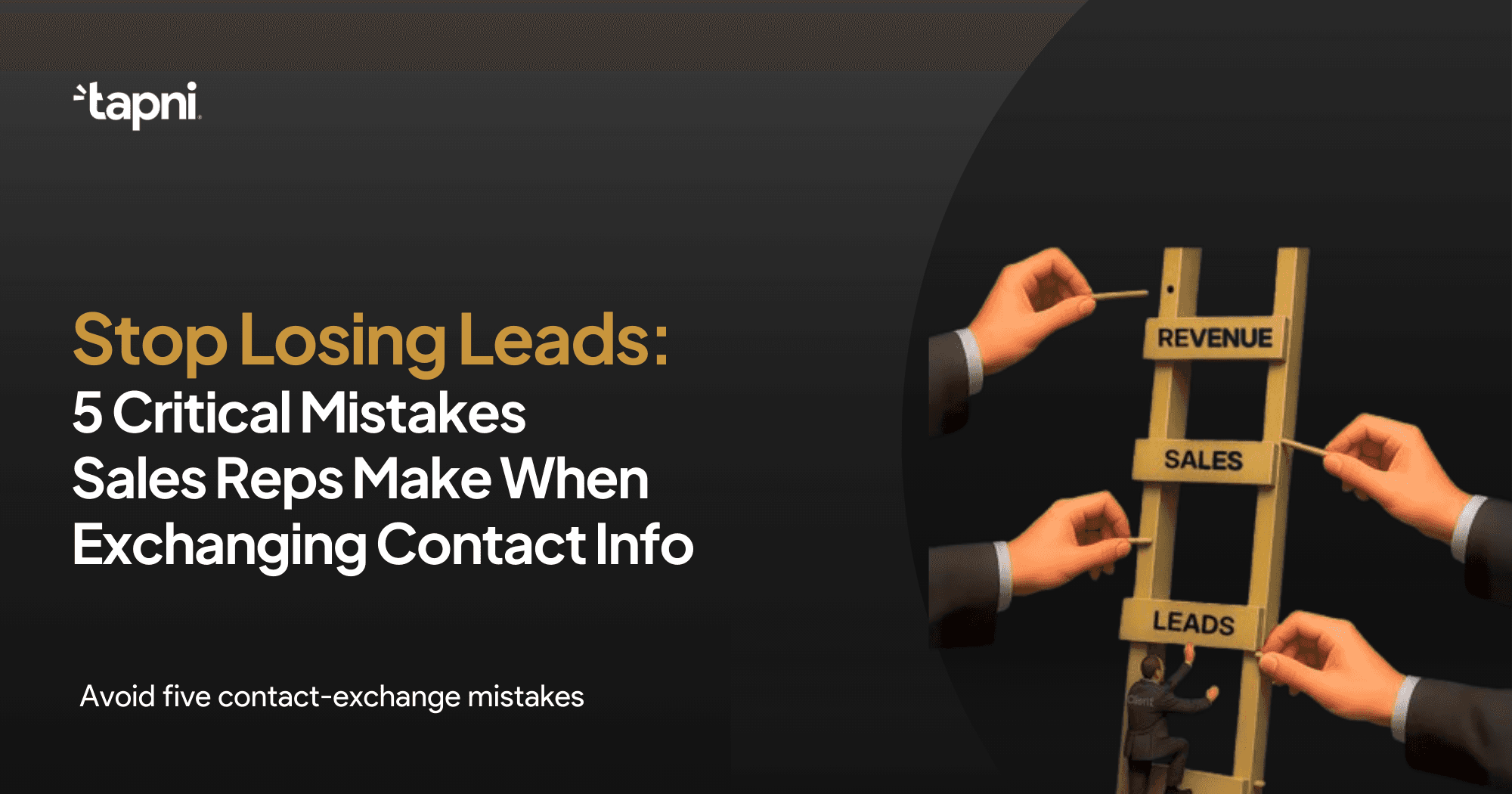
Are you losing leads after networking events? Chances are, you're making one (or more) of these five mistakes:
Relying on paper business cards vs digital alternatives that get lost or tossed.
Sending follow-ups that feel generic and unmemorable.
Failing to organize new contacts properly, leading to missed opportunities.
Using inconsistent methods to share your details, which creates confusion.
Ignoring engagement data that could guide your follow-up strategy.
The solution? Modern tools like digital business cards, CRM integrations, and analytics can help you save time, stay organized, and close more deals. Want to know how to avoid these pitfalls and connect with leads effectively? Let’s break it down.
5 Critical Contact Exchange Mistakes Costing Sales Reps Leads
Paper business cards come with a lot of downsides. They often end up crumpled in pockets, stained with coffee, or forgotten on a table after a meeting. Even worse, 63% of people toss business cards because they don’t feel an immediate need for the service being offered. And if someone does keep your card, you’re left in the dark about whether they visited your website or checked out your LinkedIn profile - making it harder to know who to follow up with.
On top of that, relying on paper means manual data entry into your CRM, which takes time and increases the chances of losing leads. There’s also an environmental cost: producing the global supply of paper business cards consumes 7.2 million trees every year. Plus, they’re outdated the moment you change your phone number, job title, or company - forcing you to reprint and redistribute hundreds of cards. Switching to digital options solves all these problems by offering instant updates and a more efficient way to exchange contact information.
Digital business cards offer a modern, hassle-free alternative. Thanks to NFC and QR code technology, sharing your contact details is as simple as a tap or a quick scan. The recipient can instantly save your information to their phone - no paper, no clutter.
Mihajlo Nikodijević, co-founder of Tapni, explains:
"Tapni is NFC networking made effortless."
Beyond convenience, digital cards provide built-in analytics, so you can track who viewed your profile, which links they clicked, and when they engaged. This data helps you identify serious prospects and follow up more effectively. Just one digital business card can replace about 1,000 paper cards, and any changes to your contact details are updated in real time for future interactions.
Digital cards also integrate seamlessly with CRMs like Salesforce and HubSpot. That means new contacts are automatically synced, and follow-up emails can be triggered instantly - no extra steps required. With a 4.6/5 rating from over 1,115 reviews, users consistently praise how digital cards simplify lead management and leave a lasting impression during meetings.
Messages like "just checking in" or "it was great meeting you" might seem harmless, but they can do more harm than good. These generic follow-ups lack substance, leaving prospects feeling like just another name on a list. This can erode trust and make you come across as unprepared - or worse, desperate. Here's the reality: only 2% of sales close during the first interaction. That means thoughtful follow-ups are not optional - they're essential. To make things even more competitive, research shows that 35% to 50% of sales go to the vendor who responds first. Add to that the fact that post-pandemic sales cycles now demand more touchpoints than ever, and it's clear that every follow-up needs to count.
Timing is everything. Reaching out within five minutes can increase response rates by 400%. If that's not feasible, aim to follow up within 24 hours - this can boost your win rates by 14% and even shorten deal cycles by 11%. But speed alone isn't enough; personalization is the key to standing out. Reference specific details from your conversation, like a challenge they mentioned, a shared connection, or a topic you bonded over. Instead of vague pleasantries, offer something useful: a relevant case study, an article that addresses their pain point, or a resource they can immediately benefit from.
End your message with a clear next step, such as proposing two specific time slots for a follow-up call. If you don't hear back after a few days, try a different approach - send a personalized LinkedIn message or a text. This persistence matters: 80% of sales leads require at least five follow-ups, yet only 8% of salespeople stick with it that long. Just as refining how you exchange contact information is crucial, fine-tuning your follow-up strategy can make all the difference in keeping leads engaged and closing deals.
Once you've nailed your follow-up strategy, the next step is keeping your contacts organized. Picture this: you meet someone at a conference who could be a game-changer for your business. You exchange business cards, make a mental note to follow up, and then... that card disappears into a pile of papers, or the contact gets buried in your phone with no context. Without a proper system, these connections often get lost, turning into missed opportunities.
The stats paint a clear picture. Around 60% of salespeople struggle with managing leads, and 88% of business cards vanish within just a week. When records are incomplete or scattered, follow-ups fall apart. You might even misclassify a promising referral partner as a sales lead, potentially damaging the relationship. Or worse, you forget to reach out entirely.
"If you delay, you'll lose precious time." - Dave Hiersekorn, Founder, GrowthFactory
Considering the average B2B sales cycle takes 2.1 months to close, but there are ways to shorten the sales cycle , having an organized system isn't optional - it's essential. Without one, your pipeline is at the mercy of chance, and the odds are never in your favor. To avoid losing valuable connections, you need to capture and organize every contact as soon as possible.
The fix is simple: start using tools to capture and categorize your contacts immediately. Modern CRM platforms like Salesforce, HubSpot, or Zoho can streamline this process, reducing manual work and minimizing errors. With features like digital business cards and AI-powered scanners, you can upload contact details straight into your CRM, complete with notes about your conversation while the details are still fresh [13][2].
The real magic happens when you categorize your contacts. Organize them into groups such as Leads, Referral Sources, Vendors, or Competitors, so you can tailor your follow-ups accordingly. Automated workflows based on "Last Activity Date" can send you reminders to check in, ensuring no one falls through the cracks - especially during busy times. Since it typically takes four follow-ups to turn a lead into a client [1], staying organized can mean the difference between closing deals and losing them.
Platforms like Tapni make this even easier by integrating directly with major CRMs. You can instantly sync contact data and add notes right after meeting someone. For example, you could tag a contact as a "hot lead from the Chicago trade show" or "referral source - knows CMOs in healthcare." This creates a clear plan for your next steps, keeping your pipeline strong and opportunities within reach.
Imagine this: you’ve organized your contacts, but you’re sharing your details in a dozen different ways - texting your number to one prospect, sending a LinkedIn invite to another, and emailing details to a third. It’s a scattered process that not only takes up more time than it should but also opens the door to mistakes. Manually entering contact details into a CRM or Excel sheet is a tedious task that can easily lead to errors or missed opportunities.
On top of that, juggling different device ecosystems (like iOS and Android) and using disconnected channels such as email, social media, and messaging apps makes things even more complicated. Prospects might get frustrated if they have to manually save your contact details or type in your phone number. And here’s the kicker: as soon as your phone number or job title changes, all those static versions of your contact information become outdated. This can lead to missed follow-ups and lost connections.
Without a unified system, your leads can end up scattered across multiple platforms. This makes it tough to keep track of who you’ve met, when you connected, and what your next steps should be. The result? A disorganized follow-up process that hurts your ability to nurture leads effectively.
The fix? Streamline your sharing methods by adopting a single, centralized system. A digital business card solutions platform can simplify this process, working seamlessly across all your touchpoints. With tools like NFC taps, QR codes, and clickable links, you can share your details consistently and effortlessly. This way, your professional identity stays current and easy to access, no matter how someone connects with you.
"No app needed. Just tap. Tapni is NFC networking made effortless."
– Mihajlo Nikodijević, Co-founder, Tapni
Look for a platform that integrates directly with your CRM, such as Salesforce or HubSpot. This ensures that every new contact is automatically synced, saving you from the hassle of manual data entry. For virtual meetings, consider embedding a QR code into your Zoom or Microsoft Teams background. This allows prospects to scan and save your information instantly. You can also include your digital business card link in your email signature to create a polished and consistent experience across all channels. By updating your digital profile in one place, you ensure that your information stays accurate everywhere - no more outdated business cards or confused prospects.
Skipping engagement metrics is like navigating without a map - you’re left guessing what works and what doesn’t. You might spend hours networking and handing out contact details, but without tracking, you have no idea if your efforts are paying off. Are people actually checking out your profile? Are they saving your contact info? Which events are driving the most interest?
Here’s a hard truth: over 80% of digital business card vs paper business card comparisons show that over 80% of traditional paper business cards are either lost or thrown away before they’re entered into any database or CRM. Even if you manage to collect contact information, you may still be clueless about whether those leads are interacting with you.
"Unless you capture contact information instantly, the odds that you might lose it are always going to be high!" – ScanBizCards
Tracking engagement metrics like Card Views and Contact Saves helps you identify where prospects drop off in your funnel. For example, hundreds might view your profile, but if only a handful save your details, it’s a sign that something in your approach needs improvement.
Analytics are your secret weapon for refining your strategy. Digital business card platforms provide real-time dashboards that show how prospects are engaging with your profile. Key metrics such as Unique Users (number of individual leads reached), Contact Saves (indicating strong interest), and Card Views by Time (pinpointing peak engagement periods) offer invaluable insights.
"A potential client saving your contact information signifies high intent and could mean they are interested in your service/product." – Kritika B, Senior Content Marketer, Uniqode
These analytics empower you to make smarter decisions. For instance, if you notice a surge in card views from a specific city, you can plan your next networking trip or campaign there. If engagement spikes during certain hours, you can tweak your follow-up timing to match. Reviewing Card Views by Device ensures your digital profile looks polished across all platforms. By diving into this data, you can focus on high-potential leads and avoid wasting energy on those who aren’t engaging.
Losing leads isn’t about bad luck - it’s about sticking to outdated methods and disorganized workflows. The five mistakes we’ve discussed - using paper cards, sending generic follow-ups, failing to organize contacts, relying on inconsistent sharing methods, and overlooking engagement data - create unnecessary obstacles. Fixing these issues removes the barriers that old-school practices put in your way.
Switching to digital business cards eliminates those obstacles. They let you capture contacts instantly, sync with CRM platforms like HubSpot, and provide real-time analytics to spot your most engaged prospects. Instead of spending 1.5 hours on manual data entry, you can save time with just one tap. These benefits aren’t just theoretical - they’re backed by experts in the field.
"Digital business cards with CRM integration are essential for moving faster, tracking better, and closing more deals." – Marwan Ramadan, Tap Teams
The payoff is clear: digital business cards can significantly boost your conversions. With a 12% interaction-to-conversion rate - five times higher than the average website - they help you avoid the fate of the 88% of cards that end up in the trash. By combining personalized follow-ups, organized contact management, consistent sharing, and data-driven prioritization, you can turn casual introductions into closed deals.
Don’t let outdated tools cost you opportunities. Use a system that captures every lead, tracks every interaction, and helps you stay ahead of the competition.
Digital business cards simplify lead management by allowing instant sharing of contact information and seamless data integration with CRM systems. This removes the hassle of manual data entry, minimizing errors and enabling sales teams to respond to potential clients faster and more efficiently.
What makes these cards stand out are features like NFC technology, QR codes, and real-time analytics. These tools provide valuable insights into interactions - think taps, clicks, and other engagement metrics. With this data, sales teams can focus on high-priority leads and fine-tune their networking strategies. By making it easier to capture contacts and follow up, digital business cards help sales professionals turn casual conversations into actionable opportunities.
CRM integrations bring a lot to the table when it comes to managing contact information. They automate the process of capturing and storing details, cutting out the need for tedious manual data entry. This not only reduces the chance of errors but also keeps everything securely stored in one central hub, making workflows smoother and saving valuable time.
On top of that, CRM integrations offer real-time insights, like tracking when someone accesses a digital business card. This kind of data helps sales teams focus on the right leads and tailor their follow-ups for better results. They also make teamwork easier by giving everyone access to shared contact details and notes, ensuring consistent communication and stronger connections with clients. By using CRM tools, businesses can manage leads more effectively, boost productivity, and improve their chances of turning potential clients into loyal customers.
Tracking how prospects engage with your tools, like digital business cards or NFC technology, is a game-changer in sales. Metrics such as taps, clicks, and engagement rates give you a clear picture of who’s genuinely interested. This means you can channel your energy into following up with leads that show real potential.
Digging into these numbers helps sales teams manage leads more effectively, improve conversion rates, and steer clear of wasting time on prospects that aren’t a fit. Plus, having real-time data at your fingertips after networking events makes it easier to follow up quickly, boosting your chances of sealing the deal and getting the most out of your efforts. When you weave these insights into your strategy, you're setting yourself up for smarter decisions and stronger sales outcomes.