Browse our comprehensive product guides and documentation



Summarize with AI







Building pages that sell often seems like a lot of (hard) work. Especially when considering the median landing page conversion rate of 6.6%, which indicates that 93% of website visits do not result in a sale.
However, the simple truth is that it is possible to boost conversions throughout your website. All you need to do is adopt a few effective conversion principles that will gently guide your leads toward a purchase decision.
So, whether you’re looking for aesthetic, design, or customer experience upgrades that will elevate your site’s conversion potential, there’s plenty that you can do to reach your goals.
This guide will go over some of the most effective conversion principles you can apply today to ensure your pages attract, engage, and convert new customers and contribute to your brand’s growth.
One of the most basic, yet commonly overlooked tips to increase the conversion power of your webpages is to ensure you instantly and clearly communicate value to web visitors.
There are several reasons why this approach works.
Consumers form first impressions about a business almost immediately upon landing on a page. According to research, this is usually less than a blink of an eye — 50 milliseconds, to be exact — and the initial impression directly impacts their brand perception and purchase intent.
Buyers are generally prone to ignoring sales messages that don’t seem relevant to their needs or experiences, while personalized content makes 96% of people likely to purchase.
There are several factors that shoppers consider before even considering investing in a solution. Most commonly, these include price, perceived value, product quality, and convenience.
So, if your website messaging is capable of instantly communicating user value in a way that’s clear, relevant, and unique in your industry or niche, then you can effectively boost page conversions without making any drastic changes to your website. In fact, something as simple as upgrading your main value propositions could be enough to elevate the sales power of your site.
For instance, the Omsom hero section is an exceptional example of how a brand can instantly communicate value. By saying it offers “proud + loud Asian flavors” that are “damn delicious” and “crafted by iconic Asian American chefs,” this brand effectively points out all the reasons why its target audience should want to invest in its products. And it works!

In addition to value and price, shoppers are bound to consider brand credibility.
In truth, it could be argued that a brand’s credible reputation is what can make or break its success at converting customers, a point that’s not that difficult to believe if you consider the latest findings by Edelman. According to this organization (the authority on all things trust-related), 88% of shoppers consider brand trust to be a purchase factor when making buying decisions, just as powerful as price or quality.
With this in mind, your conversion (and branding) strategies must prioritize building brand credibility. Perhaps the most effective (and easiest) method to do this is through social proof.
In a pinch, traditional formats (reviews and ratings) will do just fine. However, if you’re after exceptional conversion rate lifts and want to develop a business reputation that will make it easier to reach, engage, and convert new customers, it’s definitely worth showcasing more advanced types of social proof throughout your digital presence.
One of the best ways to incorporate powerful, conversion-inspiring customer feedback into your landing pages to boost sales is to showcase authentic and unfiltered user-generated content-based social proof.
For starters, explore opportunities to collaborate with creators who can produce content around your solutions and create valuable visibility for your offer.
Secondly, identify the conversations and customer feedback (yes, even those that are not submitted as testimonials) surrounding your products and explore opportunities to turn them into content for your landing pages.
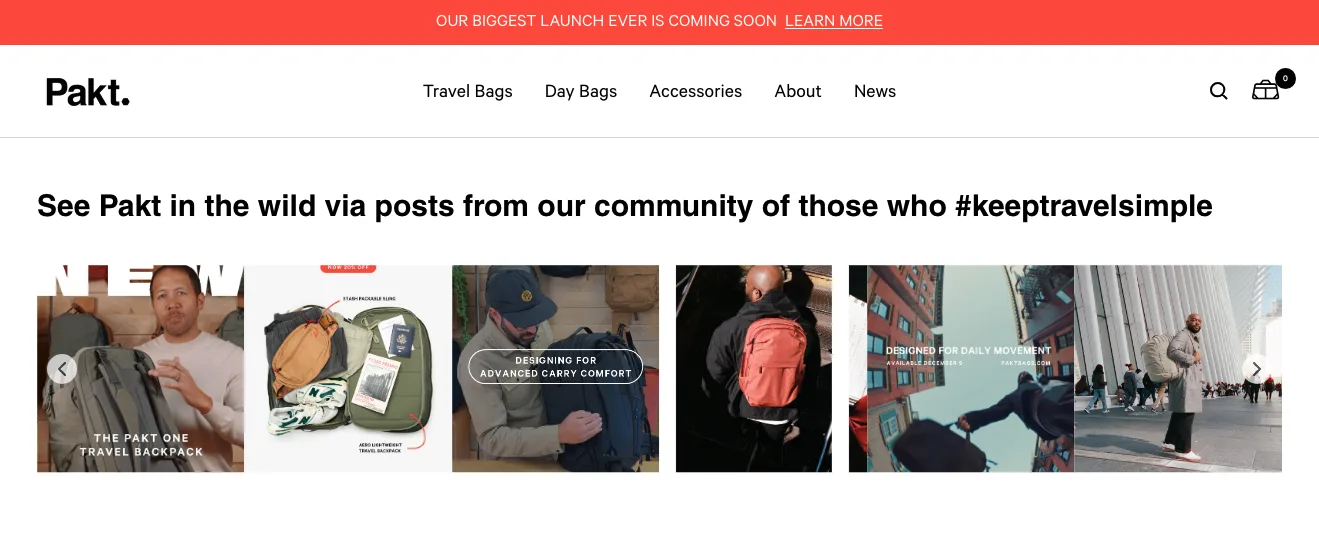
A great example of what this can look like comes from Pakt. This brand’s community post feature on the homepage achieves the perfect balance between social proof and aspirational aesthetics, with each social media image telling a relatable story about the brand, its products, and the values it stands for — all elements that genuinely inspire purchase.
We already discussed how value clarity inspires conversions. But did you know that, when exploring and evaluating potential solutions to their pain points, consumers often want to know how they can benefit from a product or service?
That’s right. Most shoppers aren’t interested in what a product can do. Instead, they just want to know how it will affect them.
This is why one of the most common (and let’s face it, most effective) pieces of sales advice is to focus on user benefits — not product features. Why? Because it demonstrates a great deal of audience understanding.
In fact, if you look at some of the research on what consumers want from brands, you’ll find that 73% expect businesses to show they understand and care about their unique needs.
So, if you’re looking for conversion principles to apply to your pages to make them sell, use every opportunity to show how your offer benefits your ideal customers, with a heavy customer-oriented approach.
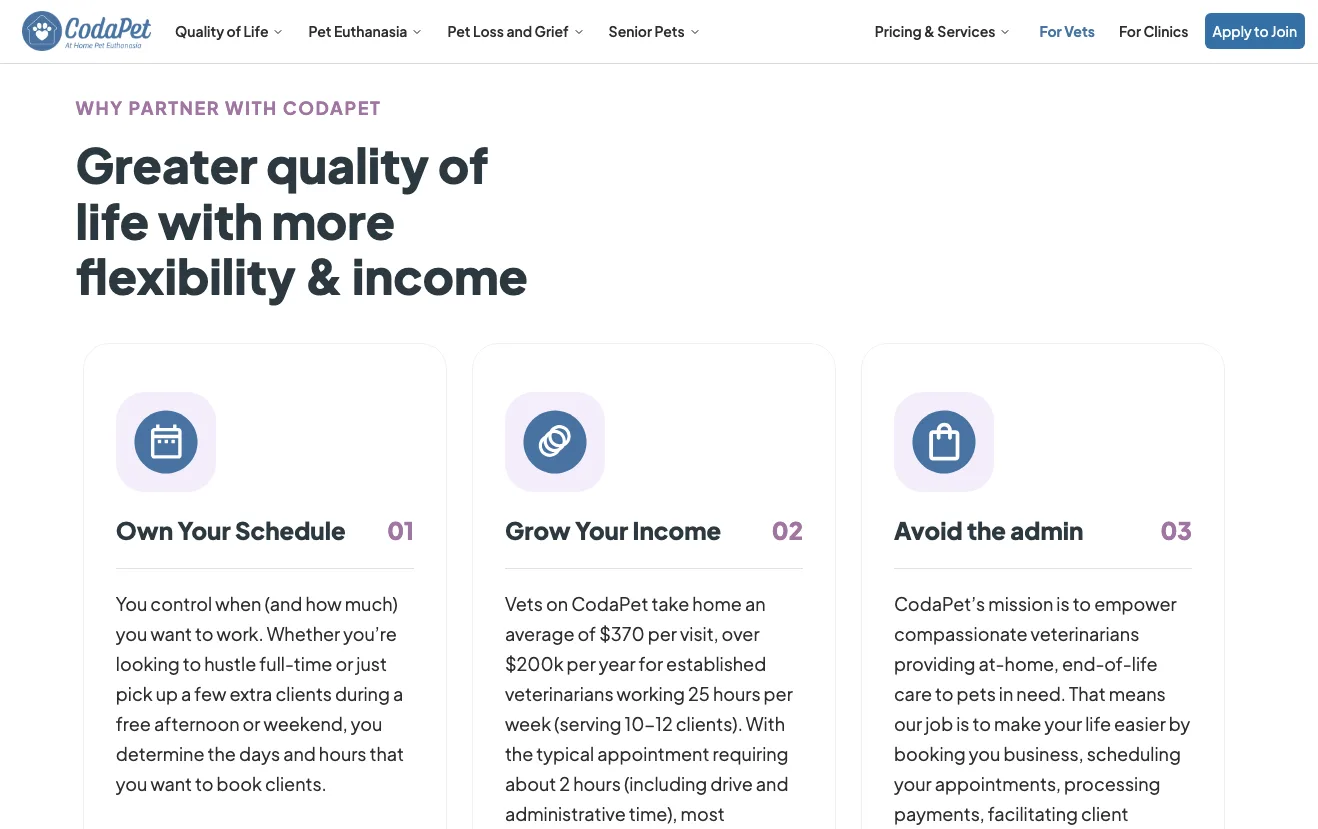
For inspiration, check out how CodaPet does it on its Vets landing page. In the Why Partner With CodaPet, the brand states that joining the network allows professionals to control their own schedule, grow their income, and avoid excessive admin, all of which are exceptionally attractive benefits for busy vets that are guaranteed to elevate conversion intent.
Even though product value is unbeatable in convincing shoppers to convert (in addition to a positive brand reputation, of course), it is essential to understand that in 2026, price truly matters.
Not only are most consumers price-conscious. Research suggests that many are choosing to trade down (with Gen Z cutting their spending by as much as 13%) in order to save money.
This, of course, can make it more challenging to build pages that sell. Nevertheless, it isn’t impossible to convince your audience that investing in your solutions is worth their hard-earned money. You just have to know how to do it right and in a way that will avoid the majority of their price sensitivity triggers.
One of the best methods to accomplish this goal on your landing pages is, of course, to adopt a transparent pricing strategy that heavily emphasizes value.
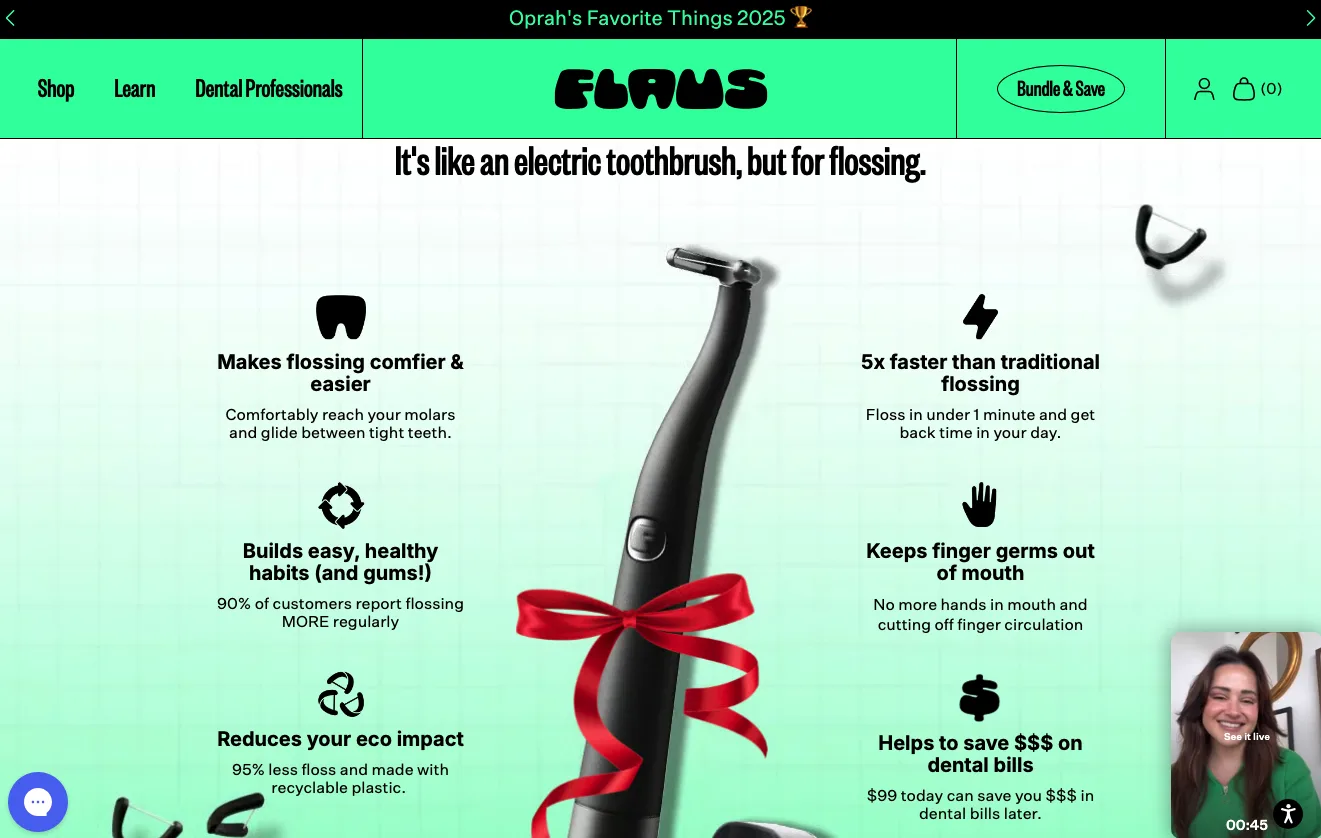
For example, if you check out Flaus, you’ll find that the brand directly mentions the price of its product right in the middle of its homepage’s benefits section. Why? Because Flaus knows perfectly well that the majority of its customers will have doubts about spending $99 on a flosser device. However, by comparing this to the amount of savings the spend can generate in dental bills through a lifetime, the spend genuinely becomes negligible and totally justified in the grand scheme of things.
Sometimes, the best way to boost sales isn’t to try to do it as quickly as possible on your landing pages. Instead, it’s to capture qualified leads, serve them with high-quality content, and gently nurture them into customers who will (hopefully) remain loyal to your brand for a long time to come.
In the offline world, the best method to do this is, of course, through a combination of networking and highly personalized digital business cards that make it easy for you to impress and capture new prospects. However, when operating exclusively online, you must find alternative methods to make your target audience truly interested in what you have to say.
Fortunately, there are several content formats that can help you engage and capture new leads without making them feel like they’re taking on a risk by converting.
For example, interactive content — such as tools or quizzes — can be a great way to address and resolve your ideal customers’ pain points while gently guiding them into your sales funnel and elevating their perception of your brand’s credibility.
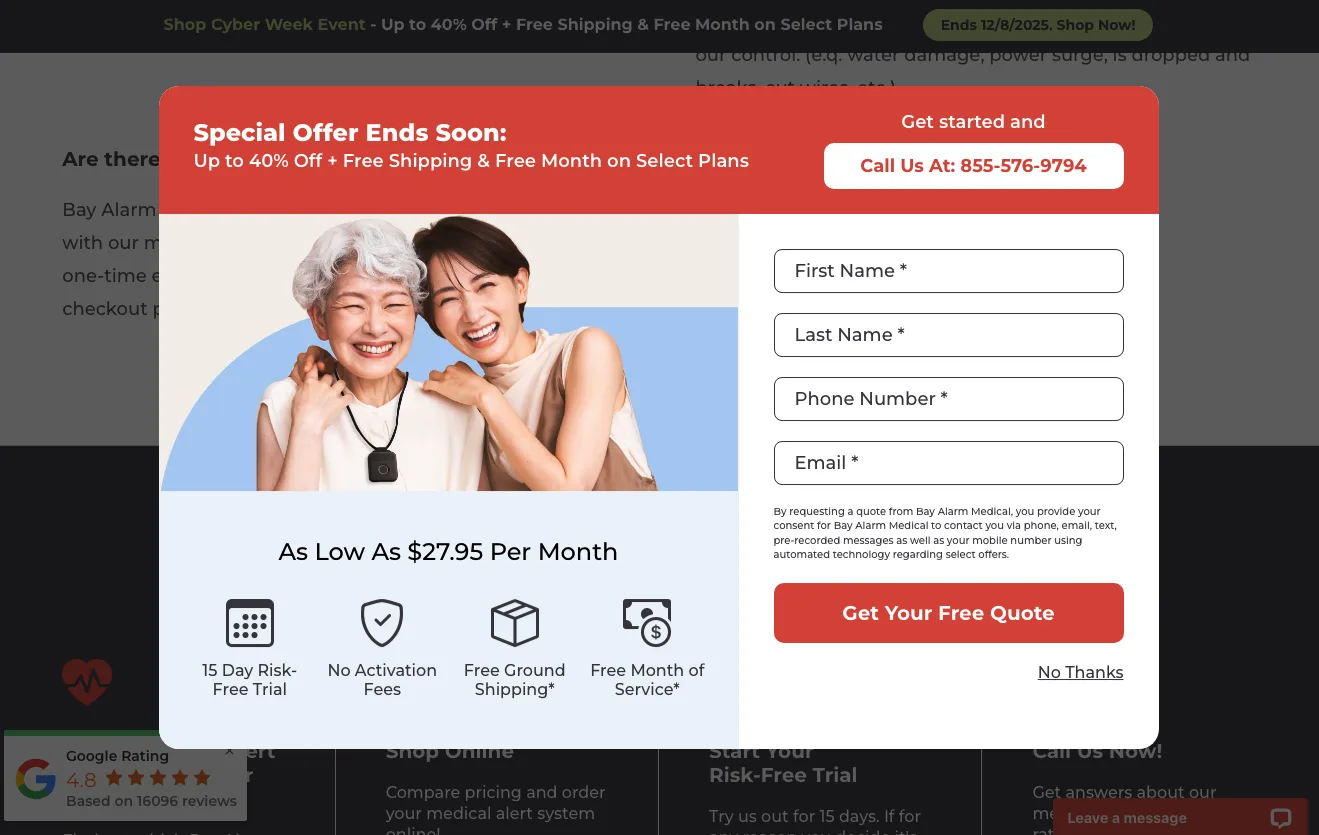
Or, if you prefer a solution that will reduce your web visitors’ perceived risk but still move them through the funnel fairly quickly, you can play around with incentivizing pop-ups or messages — like that used by Bay Alarm Medical — that clearly outline the extra value prospects can unlock by converting into leads.
While we’re on the topic of risk and conversion obstacles, it’s essential to understand that many consumers choose not to invest in a product or solution due to price sensitivity.
Consumer behavior research shows that people’s financial well-being index has declined over the past year, which explains why buyers may be spending less. And it may even explain the fact that 39% of cart abandonments happen due to high extra costs (such as shipping), with shoppers having to make sacrifices due to a slowing global economy.
However, while a value-based, transparent pricing policy might help convince some of your web visitors to click that “buy” button, it’s not going to do enough if you’re in the business of selling big-ticket items or consumables.
So, to encourage conversions even when all signs may be pointing away from it, it could be a good idea to give your audience a few conversion-inspiring options.
For example, data shows that 56% of Millennials and 49% of Gen Z use Buy Now, Pay Later schemes. Incorporating these into your ecommerce offer could be a good way to nudge your prospects closer to a conversion.
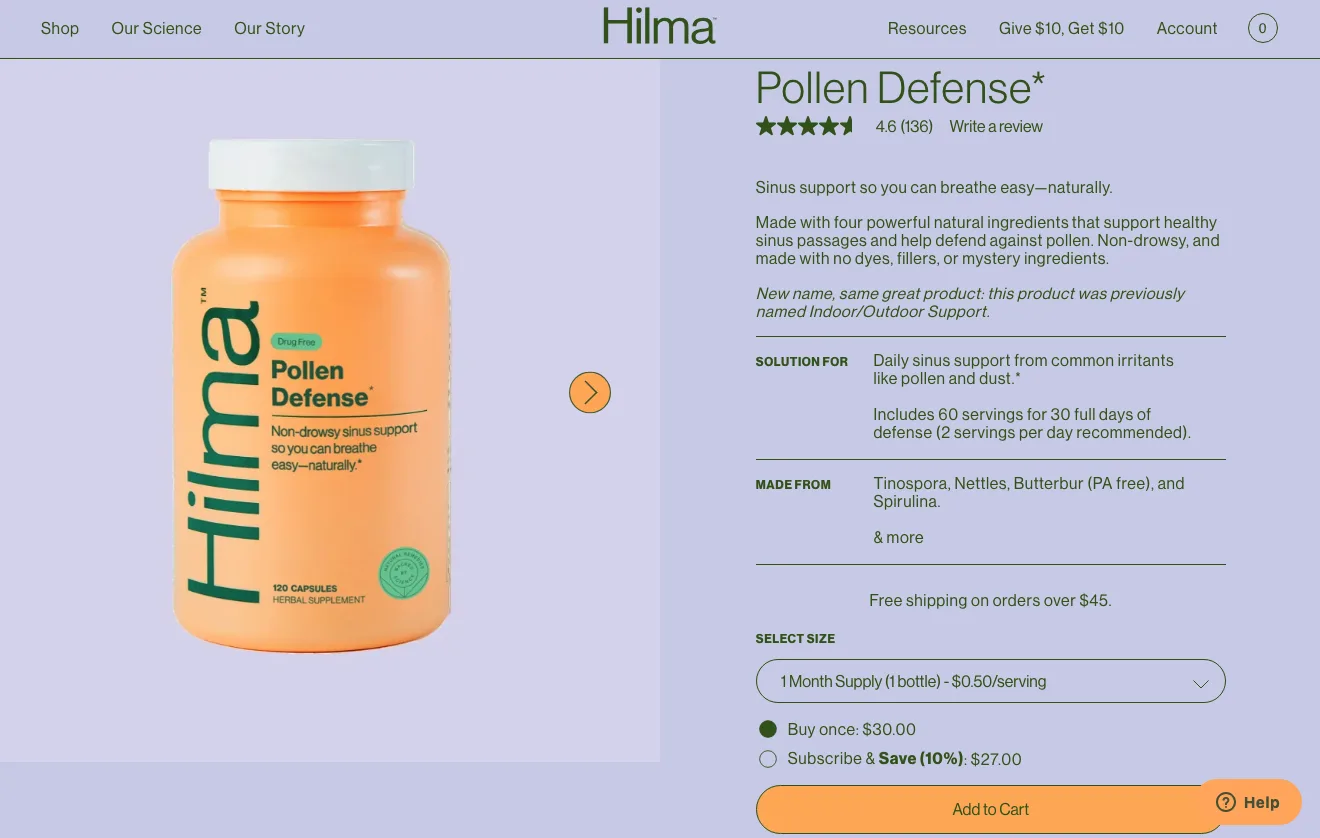
Or, if you sell consumables (or simply want to maximize brand loyalty), incentivize subscription options — like the Subscribe & Save 10% option on the Hilma website — can be equally effective at removing some of your web visitors’ price concerns and guiding them toward a purchase.
Building pages that sell can be incredibly simple. Yes, in some cases, it may require you to alter your approach to sales. But very often, inspiring prospects to buy could be as simple as presenting them with the right message at the right time.
The conversion principles outlined in this guide are all relatively easy to apply to your website — regardless of whether you’re looking for small fixes or big improvements. So think them through, test them out, and see how they work. Who knows, you might just find that fixing the wording in your messaging or finding new ways to present customers with value really could help you boost conversions and create more growth opportunities for your brand.