Browse our comprehensive product guides and documentation

The Role of Digital Presence in Modern Marketing
Have you recently built a standout product or service?
It clearly deserves high-profile attention in the modern digital universe. However, you now face the challenge of finding the right online audience to generate engagement and sales.
Nowadays, your digital presence extends beyond a website or social profile. It weaves together SEO signals with cross-domain tracking and AI-driven personalization. Your online visibility thrives on genuine community engagement and precise analytics, helping turn clicks into meaningful sales.
Every click and session will reveal how your audience explores your offerings. Now that algorithms and human behavior drive life, you must master these elements to set your company apart.
These factors determine whether you blend into the background or claim the spotlight. Are you ready to turn every interaction into a strategic advantage?
Artificial intelligence now shapes every stage of customer engagement. Modern marketing needs a system that understands your user behavior. At the level of language and intent.
Unlike older automation tools, today’s models recognize meaning in full context. They process individual keywords and also how those words interact within surrounding sentences. These are called contextual language models. They mimic how humans understand:
Tone
Urgency
Nuance
When applied strategically, AI can tailor messaging for different stages of the buyer’s journey, ensuring your content not only engages but also encourages sales conversions. Without this alignment, marketing efforts risk feeling disconnected and failing to influence purchase behavior.
These models can adjust campaign messaging to suit the different stages of your buyer’s journey. Without this, marketing feels generic and disconnected.
Your digital presence will involve showcasing your skills and experiences across various online platforms. A good example is the use of AI-driven software to create resumes. These are optimized for automated hiring systems.
The Rezi resume builder, for instance, applies AI to improve:
keyword placement
formatting
content relevance
overall scannability
Ultimately, helping resumes get noticed by both recruiters and scanning algorithms. This process greatly enhances visibility in digital searches and social networks.
These days, a clear and relevant online profile has become a vital marketing asset. It helps you present your strengths effectively.
For businesses, similar AI applications ensure that product pages, service descriptions, and campaigns are structured to maximize sales opportunities through improved visibility and audience targeting.
Digital business cards can also play a key role here, making it easy to share your contact and service info instantly, keeping your brand top-of-mind, and driving potential sales.
Modern marketing relies heavily on understanding who your customers are. As well as how you can anticipate their needs. Here, you need to take advantage of predictive segmentation. As it will help you group your users. Groupings will be based on their behaviors and likelihood to convert.
It uses algorithms like:
Lookalike modeling
Propensity scoring
Decision trees
Random forests
K-means clustering
These learning models can easily analyze large datasets. They do this to find patterns that humans might miss. So your marketing team can adjust ads and website content dynamically to better match visitor interests at that moment.
This works incredibly well in combination with real-time campaign optimization.
This level of personalization will strengthen your digital presence. Efficiently done by making interactions more relevant and timely. Which in turn creates a more engaging experience. One that encourages your users to take definite action.
Do you find yourself asking: “what is cross website tracking?”
This is a method used by marketers to follow a user’s activity across multiple domains, so you don’t just see visitors as isolated sessions on one site. When done right (and in line with privacy regulations), tools like Usercentrics can help enable this kind of tracking by managing user consent properly from the start.
By linking behaviors across sites, your business can deliver more relevant campaigns, which ultimately improve engagement and drive sales.
This broader view helps your business understand how your users interact with your brand across the entire internet. Then, your marketers can tailor their messaging and offers to each individual. This is accomplished by collecting data on:
Browsing patterns
Purchase intent
Content engagement over time
The result is a stronger digital presence. Particularly because your campaigns will become more personalized and relevant.
Tracking users across websites raises important privacy questions. Today, companies must balance the benefits of detailed data collection with respect for user rights. In addition to legal regulations like GDPR and CCPA, which Mailchimp takes care of.
Successful organizations are known to be extremely transparent about the data they collect. You can follow this example and watch it build trust in your brand.
When done correctly, this ensures your users are comfortable with their digital interactions. As a business, it is your top priority to protect your users’ data. As this is a critical part of maintaining a credible presence in modern marketing.
Attribution helps to identify specific touchpoints that contribute to a customer’s decision to take an action. Such as making a purchase or signing up for a service.
These touchpoints can include:
Search results
Ads
Social media posts
Email campaigns
Without cross-website tracking, attribution models often miss key steps in these customer journeys. Your customers may only see the last click.
However, if you use cross website data, your businesses can track how people move between platforms and devices. This reveals which marketing channels truly influence their conversions.
Accurate attribution can also improve your decision-making. It will show you where to invest your resources for better engagement in the future.

Creating an impact means you need to be remembered by your target audience. These memories form when your brand appears consistent across all channels.
This way, your users begin to recognize you from all online aspects. Including:
Website
Social media
Ads
They should all reflect the same tone and message. As this creates a unified vision of your company. This consistency will lead to trust with your target audience. Factors like these signal your professionalism and reliability. As modern consumers are quick to notice when something feels off.
Inconsistent logos or irregular posting can quickly create confusion with your audience. Which in turn will weaken your digital credibility.
Brands that align visual and messaging elements communicate professionalism and reliability. Inconsistent logos or irregular posting can confuse users and weaken trust, reducing the likelihood of future sales.
A style guide is a documented system. One that outlines how your brand communicates across digital spaces. It covers visual elements like:
Colors
Logos
Typography
It also includes aspects like:
Tone
Grammar rules
Language preferences
If you follow these rules, they will help guide every piece of content you post. Then it will feel like it comes from the same source. This is true particularly if your organization has multiple content creators.
Without a style guide, your teams could make decisions based on their individual preference. This could lead to inconsistent messaging when marketing for your brand.
By protecting your digital identity, style guides support growth while maintaining clarity — ensuring every piece of content contributes to sales goals.
In the current digital world, more than half of all internet traffic comes from mobile devices. In fact, that number continues to rise! This phenomenon is forcing businesses, like yours, to reconsider how users interact with their brand.
We suggest you stay with the times and adopt this mobile-first approach with your digital activities. Mobile-first design means your content is built for small screens before anything else.
This method forces you to rethink your user journey entirely. This type of navigation must also be touch-friendly. Your site load times also need to be very fast. Additionally, your visuals must also be adaptable to deal with changing device sizes.
Google now prioritizes mobile performance when ranking pages. That makes mobile readiness a direct contributor to your search visibility. Poor mobile performance will rapidly frustrate your users.
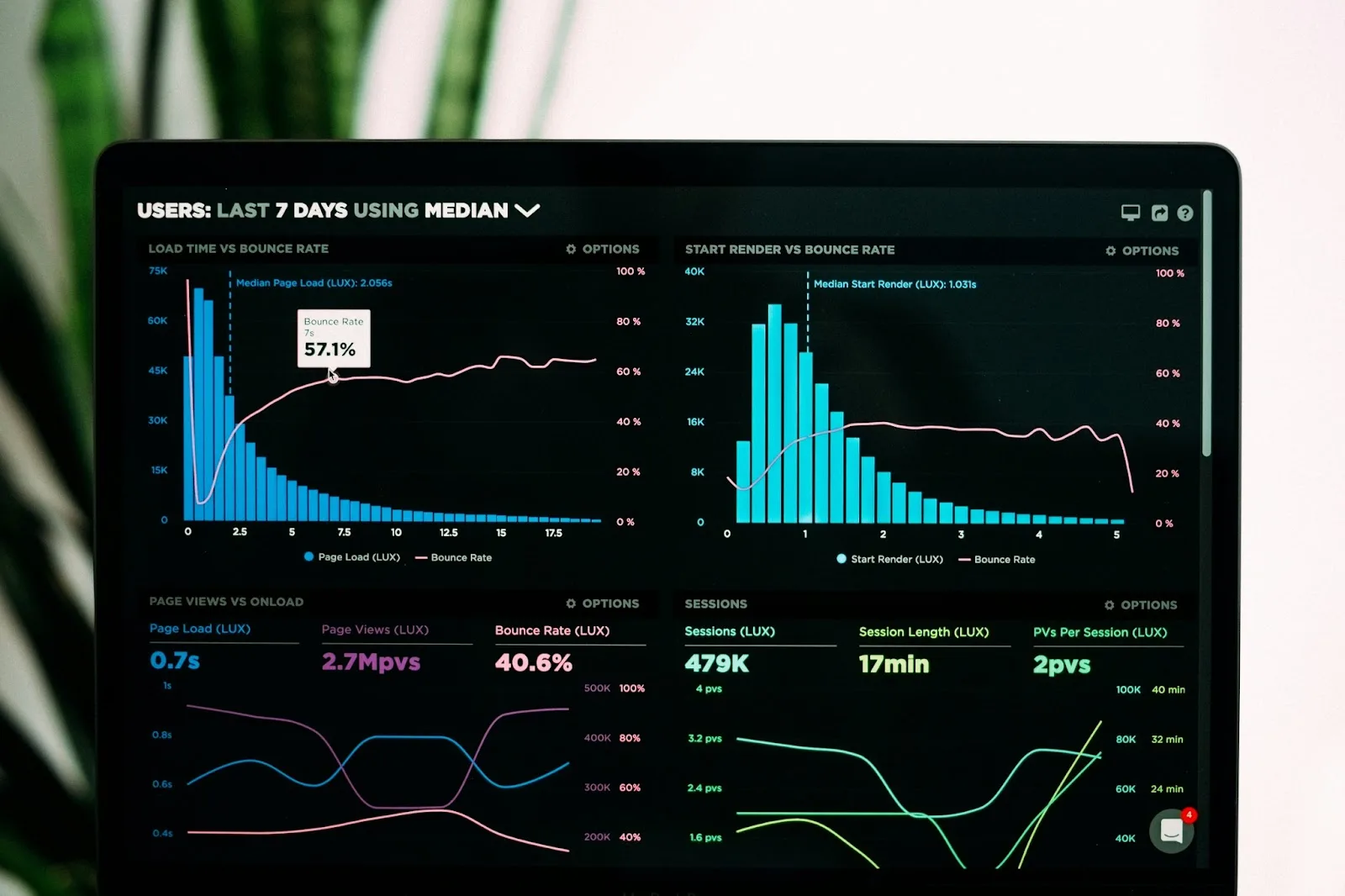
Mobile user experience is shaped by how quickly and intuitively your site functions on a phone. Google’s Core Web Vitals have become a vital part of this evaluation.
It uses unique metrics to measure:
Loading speed
Interaction readiness
Layout stability
Sites that score poorly in these departments will rank lower in search results. That means fewer clicks and less visibility if yours isn’t optimized.
Real people bounce from sites that take too long to load. They frequently abandon forms that don’t respond instantly. As no one has time to waste in the modern digital world.
Therefore, you must invest in the best solutions that avoid these pitfalls. As Mobile UX will directly affect how your audience will perceive and engage with your business.
It’s time to establish your brand as credible and modern with:
Clear navigation
Fast load times
Smooth functionality

Like a well-oiled machine, your digital presence operates as a constant proof of your relevance. It displays your rock steady stability to potential partners and customers.
Today, you can step into an environment where your signals are consistent and your tone matches your intent. It will reflect your high degree of competence. All without having to declare it.
Silent brands are assumed to be static, as consumers assume that nothing is happening. This is where you need active, well-aligned content to create your own narrative.
Now is the time to make your digital presence visible, long after the conversation ends.