Browse our comprehensive product guides and documentation



Summarize with AI








If we’ve learned anything, it’s that not all leads are equal.
Generating more leads doesn’t automatically create more revenue. Many companies have a healthy flow of inbound enquiries, website traffic, and marketing activity, yet their sales pipelines move slowly. For them, the problem often isn't lead volume, but visibility.
Without reliable data, marketing and sales teams struggle to understand which leads are worth pursuing, where prospects drop out of the funnel, and which activities contribute to revenue. Decisions become reactive, resources get spread too thin, and pipeline growth slows.
Data-driven marketing changes that.
Instead of relying on assumptions, teams use data to understand buyer behaviour, improve lead quality, streamline handoffs, and identify opportunities for improvement throughout the customer journey.
Here are seven ways data-driven marketing teams are improving sales pipeline efficiency.
Not all leads deserve the same level of attention.
Some prospects are casually researching a problem. Others are actively comparing vendors and preparing to make a purchase decision. Treating both groups the same wastes time and slows down sales activity.
Behavioral data helps separate curiosity from intent.
Common signals for identifying where a prospect is in the buyer journey include:
Visiting pricing pages
Requesting a product demo
Attending webinars
Returning to the website multiple times
Downloading bottom-of-funnel content
Engaging with marketing emails
A prospect who downloads a beginner's guide may not be ready for a sales conversation, but someone requesting a demo after visiting a pricing page several times probably is.
When marketing teams use these signals to prioritise leads, sales teams spend more time speaking with buyers who are closer to making a decision. That creates a more efficient pipeline and improves conversion rates without increasing lead volume.
Few things damage pipeline efficiency faster than misalignment between marketing and sales teams.
A typical scenario: Marketing celebrates a successful campaign because it generated hundreds of leads. Sales reviews the same campaign and sees very few qualified opportunities.
Marketing argues the leads were strong. Sales argues they weren't. Neither team has enough visibility into what happened after the lead entered the pipeline.
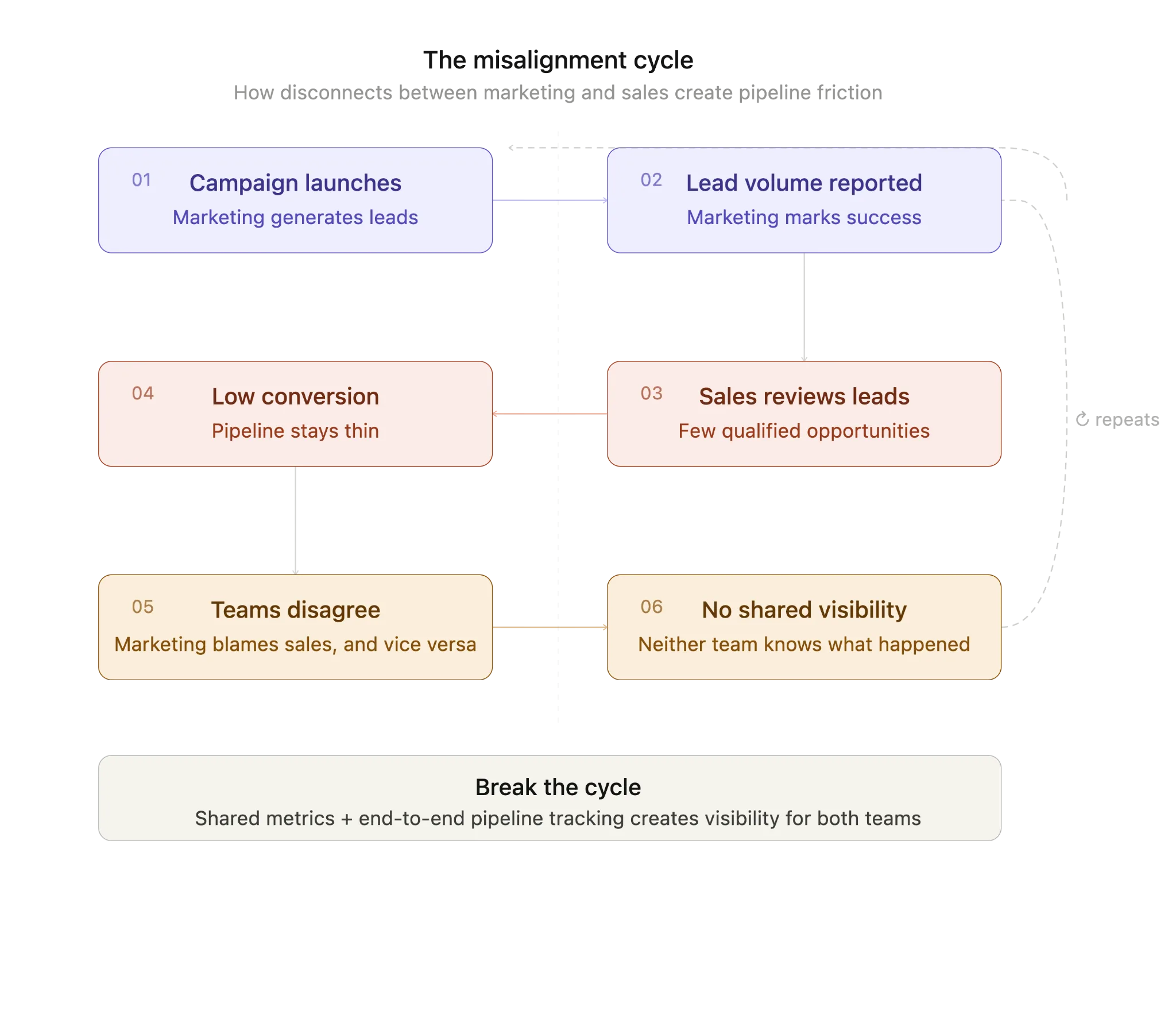
Data helps remove the guesswork.
Instead of focusing on isolated metrics, both teams can evaluate performance through shared measures such as marketing qualified leads (MQLs), sales qualified leads (SQLs), opportunity creation, pipeline contribution, and revenue generated.
Many businesses also partner with a data-driven marketing agency to build reporting frameworks that connect marketing activity directly to business outcomes.
As the agency landscape grows, agency and vendor intelligence tools help teams evaluate specialists by focus area and make more informed partnership decisions.
When everyone works from the same data, teams spend less time debating performance and more time improving it.
Most pipelines contain friction points, and finding them can be challenging.
Let’s say a company assumes lead quality is the problem, but the real issue is slow follow-up. Another company may blame conversion rates when prospects are actually dropping out because of inconsistent qualification criteria.
Pipeline analytics helps uncover what is really happening.
For example, reporting may reveal that opportunities regularly stall after a product demonstration. In another organisation, data might show that leads wait several days before receiving a response from sales.
Neither problem is obvious without visibility into the funnel.
Once bottlenecks become visible, teams can test improvements, measure the results, and remove any obstacles preventing opportunities from moving forward.
Often, the biggest gains come from fixing small issues that have been hiding in plain sight.
Events, conferences, and networking opportunities are important sources of new business.
The challenge begins once the event is over.
Look at this familiar situation: A sales representative has a productive conversation with a potential customer. Business cards are exchanged, and notes are written down. Then everyone returns to work, and the follow-up process begins. Or doesn't.
Contact details get lost, information is entered incorrectly, and follow-up takes longer than planned.
And then, momentum disappears.
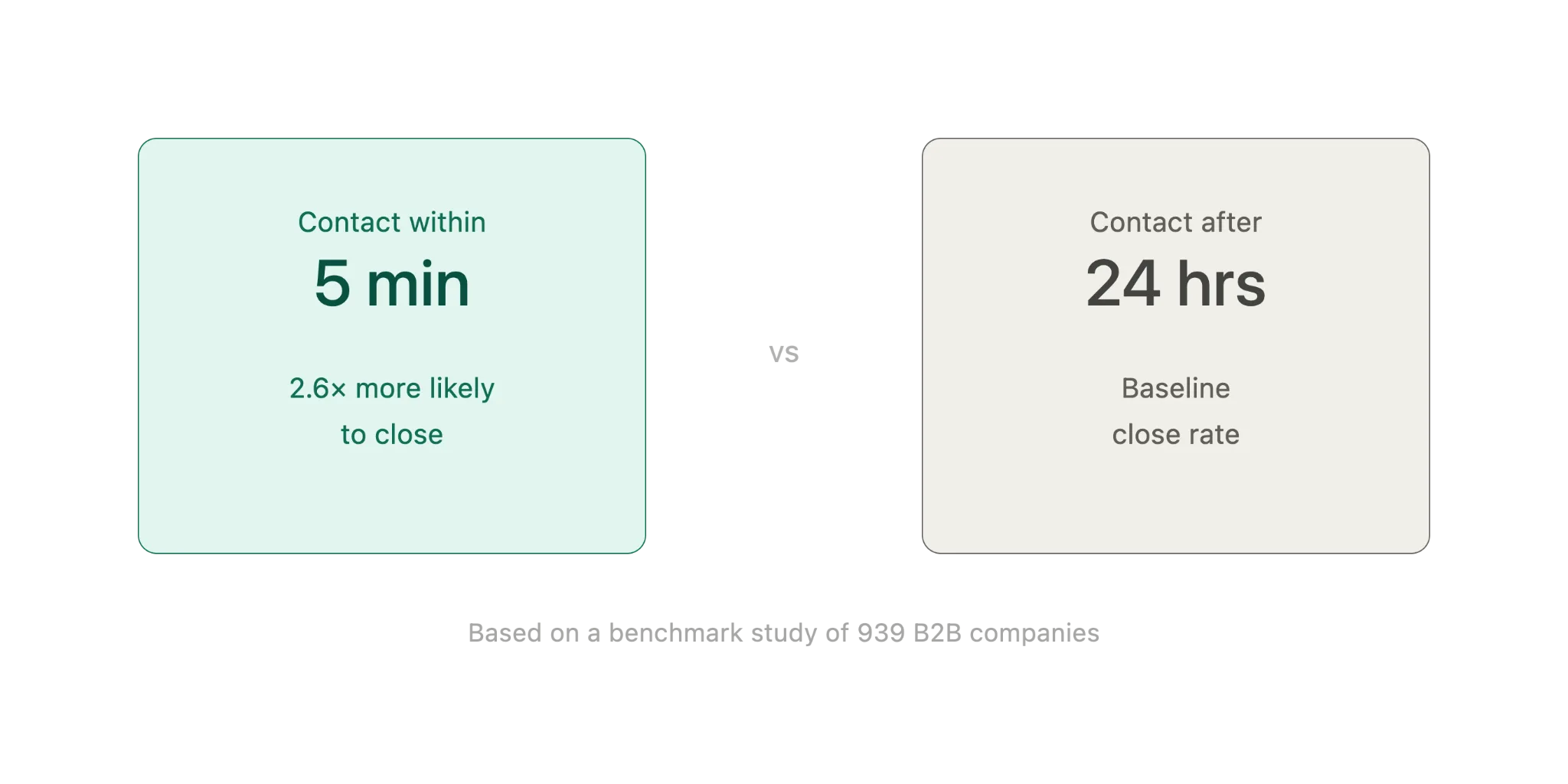
Speed matters more than many organisations realise. According to a 2026 benchmark study of 939 B2B companies, leads contacted within five minutes were 2.6 times more likely to close than leads contacted after 24 hours. This shows that fast follow-up doesn't just improve the customer experience but also increases the chances of a conversation turning into revenue.
Modern lead capture tools can help close this gap. Contact information is collected instantly, synced with CRM systems, and assigned for follow-up while conversations are still fresh. The result? A cleaner database, faster engagement, and fewer missed opportunities.
Most sales teams have more opportunities than they actually pursue.
The question isn't whether there are enough leads; it’s which leads deserve attention first.
Predictive analytics helps answer that question.
By analysing historical customer data, teams can notice patterns associated with successful conversions. These patterns can include factors like industry, company size, engagement history, website behaviour, and previous purchasing trends.
For example, a software company may find that mid-market organisations in a specific sector convert at a higher rate than other segments. Another business may discover that prospects engaging with particular content assets are more likely to become customers.
With data-driven analytics like these, sales teams can focus their efforts where they are most likely to have an impact.
Most buyers can spot a generic sales email from a mile away.
The message mentions broad industry pain points, includes a templated introduction, and reads like it can be sent to hundreds of companies with only minor edits. While quick and easy, these messages rarely perform well.
Data allows teams to build more relevant communication by personalising outreach through:
Industry-specific messaging
Content recommendations based on previous engagement
Account-based marketing campaigns
Follow-up triggered by buyer behaviour
Outreach tailored to company size or business goals
Different prospects in different industries have different priorities.
Using customer data helps marketing and sales teams tailor conversations to the prospect's specific situation. This creates a more relevant experience and often leads to stronger engagement throughout the buying process.
For years, marketing teams relied heavily on activity metrics.
Traffic increased. Social engagement improved. Email open rates climbed. Success!
While those numbers provide useful information, they don't always explain whether marketing is contributing to revenue growth.
Data-driven organisations take a different approach by focusing on metrics that connect directly to business outcomes. This includes:
Pipeline generated
Pipeline influenced
Opportunity creation
Customer acquisition cost
Revenue contribution
Return on marketing investment
With this information, teams get a clearer understanding of which campaigns, channels, and activities are driving results.
It also improves decision-making.
When teams know which activities contribute to pipeline growth, they can invest more confidently and reduce spending on initiatives that don’t produce any meaningful outcomes.
The conversation now shifts from activity to impact.
Pipeline efficiency doesn’t improve by simply making one major change. Often, it improves through a series of smaller decisions, and data makes those decisions easier.
Teams gain visibility into buyer behaviour, understand where opportunities are getting stuck, and identify which activities contribute to revenue. That visibility helps them focus effort where it matters most.
Marketing and sales teams shouldn’t be relying on instinct alone. They should be using data to understand what is working, what isn't, and where they can find the next opportunity for improvement.