Browse our comprehensive product guides and documentation



Summarize with AI








The old rivalry between marketing and sales is not merely a corporate cliché. It has become a significant drain on revenue. When these two departments operate in silos, the business suffers from fragmented data, wasted leads, and a disjointed customer experience. However, alignment does not mean getting along or attending the same weekly meeting. True synchronization happens at the structural level through workflow design.
By building shared processes, integrated data streams, and unified goals, organizations can transform these two separate engines into a single, powerful revenue growth machine. In this guide, we will explore how to architect a workflow that bridges the gap between marketing and sales for long-term success.
Before we can fix the workflow, we have to understand why it breaks. Traditionally, marketing focuses on the top of the funnel, such as brand awareness and lead volume. Sales focuses on the bottom of the funnel, such as conversions and revenue.
The friction usually occurs at the handoff point. Marketing feels they are sending over high-quality prospects that sales ignores. Sales feels the leads provided by marketing are junk and not ready to buy. This disconnect often stems from a lack of shared definitions. Without a common language, no amount of software can fix the underlying problem.
Tal Holtzer, CEO of VPSServer, highlights the importance of structured collaboration between teams. He explains that “Marketing and sales alignment is not just about sharing leads. It’s about building clear workflows where both teams understand the customer journey, communicate expectations, and take ownership of each stage of the funnel.”
Instead of two separate funnels, modern organizations use a unified revenue funnel. This model tracks a prospect from the first touchpoint (like a blog post or social ad) all the way to the signed contract and even post-purchase advocacy.
A unified funnel requires a Service Level Agreement (SLA). This is a formal document where marketing commits to delivering a specific quantity and quality of leads, and sales commits to following up on those leads within a specific timeframe.
Paul Posea, Outreach Specialist at Superads, emphasizes the importance of shared definitions and execution discipline. He notes that “Alignment breaks down in the gray areas. If marketing and sales don’t agree on the exact criteria that make a lead sales-ready, response time slows, and conversion rates suffer.”
He adds that unified funnels only succeed when handoffs are structured, expectations are documented, and follow-ups happen within clearly defined timelines.
Workflow design starts with data. Lead scoring is the process of assigning values to prospects based on their behavior and demographics. To align your teams, both marketing and sales must have a hand in creating this scorecard.
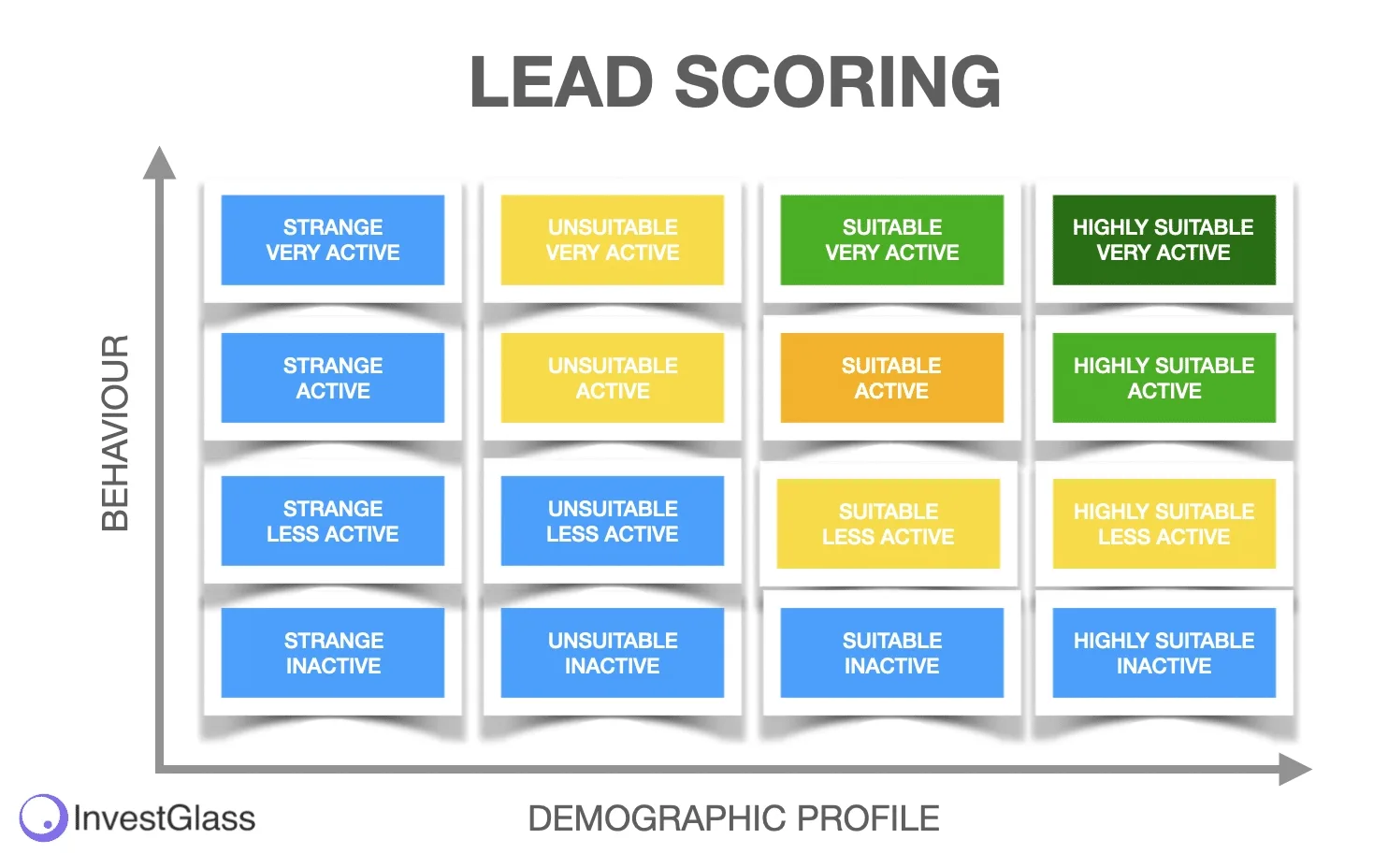
Source: LeadsBridge
Marketing often overvalues behavioral data (like downloading a whitepaper), while sales often overvalues demographic data (like job title or company size). A balanced workflow incorporates both. For example, a "VP of Operations" (high demographic score) who has visited the pricing page three times (high behavioral score) should trigger an immediate alert for the sales team.
When teams agree on these data points, the next step is to refine the criteria used to move a prospect through the funnel. It is essential to understand how to improve lead qualification by using proven frameworks like BANT (Budget, Authority, Need, and Timeline).
By integrating these qualification standards directly into your workflow, you ensure that sales reps only spend their energy on prospects who have a genuine intent to purchase, rather than chasing every person who simply downloaded a PDF.
The workflow must include a return to sender path. If sales finds that a lead isn't ready, the workflow shouldn't just end. Instead, the lead should be moved back into a marketing automated nurturing sequence. This ensures that no potential revenue falls through the cracks.
The handoff is the most fragile part of the customer journey. A manual handoff, like sending an email or a Slack message, is prone to human error. A designed workflow automates this via a CRM (Customer Relationship Management) system.
When a lead reaches a certain score threshold, the CRM should automatically reassign the lead owner from a marketing alias to a specific Sales Development Representative (SDR).
Timing is everything. Research shows that following up with a lead within five minutes can dramatically increase the likelihood of conversion. Your workflow should include instant notifications through mobile apps or internal communication tools so sales teams can engage prospects while interest is at its peak.
Jeffrey Zhou, CEO of Fig Loans, advocates for trigger-based transparency. He explains that when marketing software automatically alerts a salesperson that a high-intent prospect is actively browsing key pages, it enables timely and relevant outreach.
“Speed matters, but context matters more. When sales teams know what a prospect is looking at in real time, the conversation shifts from interruption to relevance,” says Zhou.
By embedding real-time signals into the workflow, organizations turn passive data into proactive engagement, bridging the gap between marketing activity and sales execution.
Marketing spends thousands of hours creating content, but studies show that up to 70% of B2B marketing content goes unused by sales. This is a massive waste of resources.
A well-designed workflow includes a centralized, searchable repository where sales can find the right content for every stage of the deal. Instead of sales reps digging through old folders, marketing should tag content by "Industry," "Pain Point," and "Funnel Stage."
The workflow should also allow sales to request content from marketing. Salespeople are on the front lines, hearing the actual objections of customers. If they report that five prospects in a row asked about a specific security feature, marketing should prioritize creating a one-pager on that topic.
You cannot align teams if they are looking at different sets of data. If marketing and sales live differently, and the two don't talk to each other, you have a recipe for disaster.
Every interaction a prospect has with the brand should be visible to both teams. When a salesperson calls a lead, they should be able to see exactly which emails the lead opened and which webinars they attended. This prevents the salesperson from repeating information the prospect already knows.
Part of effective workflow design is maintaining clean data pipelines. This includes regularly removing duplicate records, correcting formatting inconsistencies, and standardizing inputs across systems. A cluttered CRM erodes trust in the platform, and once sales representatives lose confidence in the data, adoption quickly declines.
Andrew Bates, COO of Bates Electric, emphasizes that system alignment is required in service-based operations where timing and coordination directly impact customer experience. “When dispatch and sales systems aren’t aligned, small data errors become missed appointments or delayed follow-ups. Clean, synchronized data keeps our teams prepared and responsive,” says Bates.
Strong integrations and bi-directional syncing between CRM, scheduling, and invoicing platforms ensure information flows seamlessly across departments. In service industries, operational clarity often begins with data clarity.
If marketing is measured on leads and sales are measured on revenue, they will never truly be aligned. To fix the workflow, you must align the incentives.
Try implementing revenue marketing metrics. Instead of just reporting on impressions or clicks, marketing should be held accountable for marketing-sourced revenue. This shifts the focus from quantity to quality.
Regular "Smarketing" (Sales + Marketing) meetings should focus on problem-solving rather than finger-pointing. If the pipeline is thin, both teams should collaborate on a short-term campaign to boost interest.
Consider a mid-sized SaaS company that struggled with a 15% lead-to-opportunity conversion rate. Marketing was generating 2,000 leads a month, but sales claimed only 200 were worth calling.
The Intervention: The company redesigned its workflow. They stopped measuring marketing on leads and started measuring it on qualified meetings booked. They implemented a mandatory 24-hour feedback loop where sales had to provide a reason code for every disqualified lead.
The Result: Within six months, lead volume actually dropped to 1,200 per month, but the quality skyrocketed. The lead-to-opportunity rate jumped to 45%. Because marketing was no longer chasing fluff leads, they could spend more time creating high-value case studies that helped sales close bigger deals.
Alignment doesn't end when the contract is signed. In a subscription-based economy, retention is just as important as acquisition. The workflow must transition the customer from the sales team to the Customer Success (CS) team seamlessly.
All discovery notes, documented customer pain points, stated goals, and relevant internal context must be transferred from sales to the customer success team. When this handoff is incomplete, customers are forced to repeat their challenges during onboarding, which immediately weakens trust and momentum.
David Lee, Managing Director at Functional Skills, emphasizes that the transition from sales to delivery is a critical moment in the customer journey, particularly in education and training environments where expectations and outcomes must be clearly aligned.
“The period immediately after enrollment sets the tone for the entire relationship. If learners feel they are starting over with every new contact, confidence drops. The experience should feel continuous, not fragmented,” says Lee.
A structured handoff ensures the onboarding conversation builds on what has already been discussed rather than restarting it. That continuity strengthens engagement, accelerates implementation, and reinforces professionalism from day one.
Alignment shouldn't stop the moment a contract is signed. In fact, the handoff from sales to customer success is where the most critical workflow design happens. If marketing and sales have worked hard to build trust, a clunky transition to the account management phase can destroy that rapport in days.
A high-performing workflow ensures that the customer success team isn't starting from scratch. They should already understand the “why” behind the purchase.
When sales closes a deal, the workflow should automatically trigger a "Knowledge Transfer" task. This isn't just a basic email; it is a structured data transfer that includes the specific pain points the customer mentioned during discovery, the internal stakeholders who may require alignment, and the quick wins expected within the first thirty days.
David Tang, Founder of KPI Depot, emphasizes that measurable continuity is what protects revenue after the deal closes. “If the KPIs that drove the sale are not clearly documented and handed over to customer success, you create a gap between promise and performance,” he explains. “Post-sale workflows should convert sales commitments into trackable metrics from day one. Otherwise, retention risk increases before onboarding is even complete.”
Marketing plays a role here as well by providing welcome kits and onboarding content that align precisely with the performance expectations established during the sales cycle.
Even the most perfect technical workflow will fail if the culture is toxic. Leadership must set the tone that marketing and sales are on the same team.
One effective workflow element is shadowing. Have your marketing team sit in on sales calls once a month. Have your sales reps attend a marketing brainstorming session. This builds empathy and helps each team understand the challenges the other faces.
When a major deal closes, celebrate both the salesperson who closed it and the marketing team that nurtured the lead for six months. Public recognition reinforces the idea that success is a joint effort.
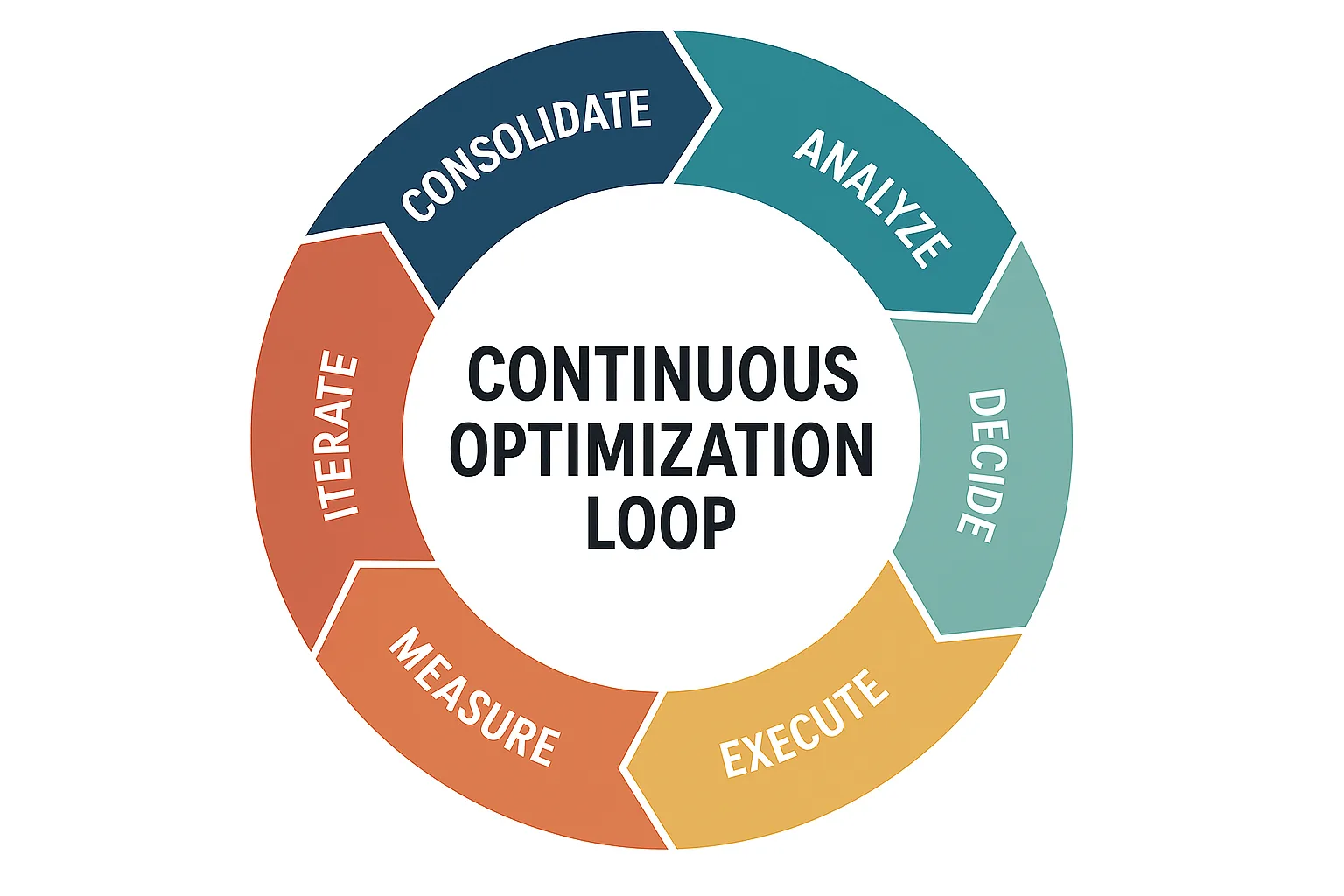
Workflow design is not a set it and forget it task. Markets change, products evolve, and customer behavior shifts.
Source: Coupler
Every 90 days, leadership should review the entire workflow. Are the lead scores still accurate? Is the CRM automation working correctly? Are there new bottlenecks in the funnel?
Do not hesitate to refine your workflow in small, controlled ways. Test a new email cadence, adjust lead routing logic for a specific segment, or experiment with revised qualification criteria. Measure the results carefully and expand what proves effective.
Rachel Sinclair, Acquisitions Director at US Gold and Coin, believes operational agility is just as important as financial discipline.
“Markets shift, customer behavior evolves, and internal capacity changes. If workflows remain static, they quickly become misaligned with reality. Small, measured adjustments allow teams to improve without creating unnecessary disruption,” says Sinclair.
Treating workflows as evolving systems rather than fixed procedures encourages continuous improvement. Incremental experimentation reduces risk while ensuring marketing and sales alignment stays responsive to changing conditions.
In today's market, "one-size-fits-all" marketing is dead. Prospects expect a personalized experience from the first ad they see to the final sales proposal. A sophisticated workflow enables this personalization at scale.
Use your workflow to serve different website content based on the visitor’s industry. If a prospect from the healthcare sector visits your site, the workflow should trigger healthcare-specific testimonials and case studies.
Sales teams are seeing massive success using personalized video in their outreach. A workflow can trigger a task for a salesperson to record a 30-second video message once a high-value prospect interacts with a specific piece of bottom-funnel content.
Not every "no" is a "no forever." Often, it’s just a "no for now." A common flaw in sales workflows is that these leads are simply abandoned.
Design a closed-lost workflow. If a deal is lost due to budget or timing, the lead should automatically flow back into a long-term marketing nurture stream. Six months later, the system can resurface the lead to sales when the timing might be better.
If a previously lost lead suddenly revisits your pricing page after months of inactivity, that is a powerful signal. Your workflow should immediately notify the original sales owner so they can follow up with timely, relevant outreach.
Sharon Amos, Director at Air Ambulance 1, emphasizes that in high-stakes service industries, responsiveness can make a meaningful difference.
“In medical transport, timing and attentiveness matter. When someone re-engages after a period of silence, it signals renewed intent. Structured follow-up ensures we respond with relevance rather than relying on chance,” says Amos.
Often, the most efficient growth comes from leads that already understand your service but were not ready to move forward initially. A strong re-engagement workflow activates existing awareness, strengthening pipeline performance without increasing acquisition costs.
Artificial Intelligence is changing the way we align sales and marketing. From predictive analytics to automated chatbots, AI can handle many of the manual parts of the workflow.
Instead of humans guessing which factors matter most, AI can analyze thousands of historical deals to find the hidden patterns of your best customers. It might be discovered that prospects who watch a specific video are 80% more likely to close.
Chatbots can now qualify leads in real-time on your website. They can ask the basic questions, determine if the lead is a good fit, and even book a meeting directly on a salesperson’s calendar, all while the marketing and sales teams are asleep.
One of the biggest friction points in any company is the credit war. Marketing wants to show their ROI, while sales wants to claim the win for their outreach. If your workflow only uses "Last-Click" attribution, giving all the credit to the final person who touched the deal, you are creating a culture of internal competition rather than collaboration.
A modern workflow uses multi-touch attribution to show the full story. Perhaps marketing found the lead through a targeted LinkedIn ad, nurtured them with three months of newsletters, and then a salesperson sent a perfectly timed breakup email that finally got the meeting.
In this scenario, both teams won. By designing a workflow that tracks every touchpoint in a shared dashboard, you remove the ego from the equation. When everyone can see that it took seven marketing touches and three sales calls to close a high-value account, the conversation shifts from "who did it" to "how do we do it again."
Aligning marketing and sales through workflow design is a journey, not a destination. It requires a mix of technical strategy, data discipline, and cultural shifts. When you stop looking at these departments as separate silos and start seeing them as a continuous stream of customer interaction, the results are transformative.
Your organization will not only increase its revenue but also provide a much better experience for your customers. In the end, the companies that win are the ones that make it easiest for the customer to buy. A seamless internal workflow is the only way to make that happen.