Browse our comprehensive product guides and documentation



Summarize with AI




Contentful is one of the most popular headless CMS platforms on the market, but it isn't the perfect fit for every organization.
As businesses expand into new markets, launch additional brands, or grow through acquisitions, they often require more advanced capabilities around content governance, localization, content reuse, and multi-brand management.
Fortunately, several CMS platforms offer similar flexibility while addressing different enterprise needs.
Some focus on structured content and omnichannel delivery, while others prioritize personalization, multisite management, or enterprise governance.
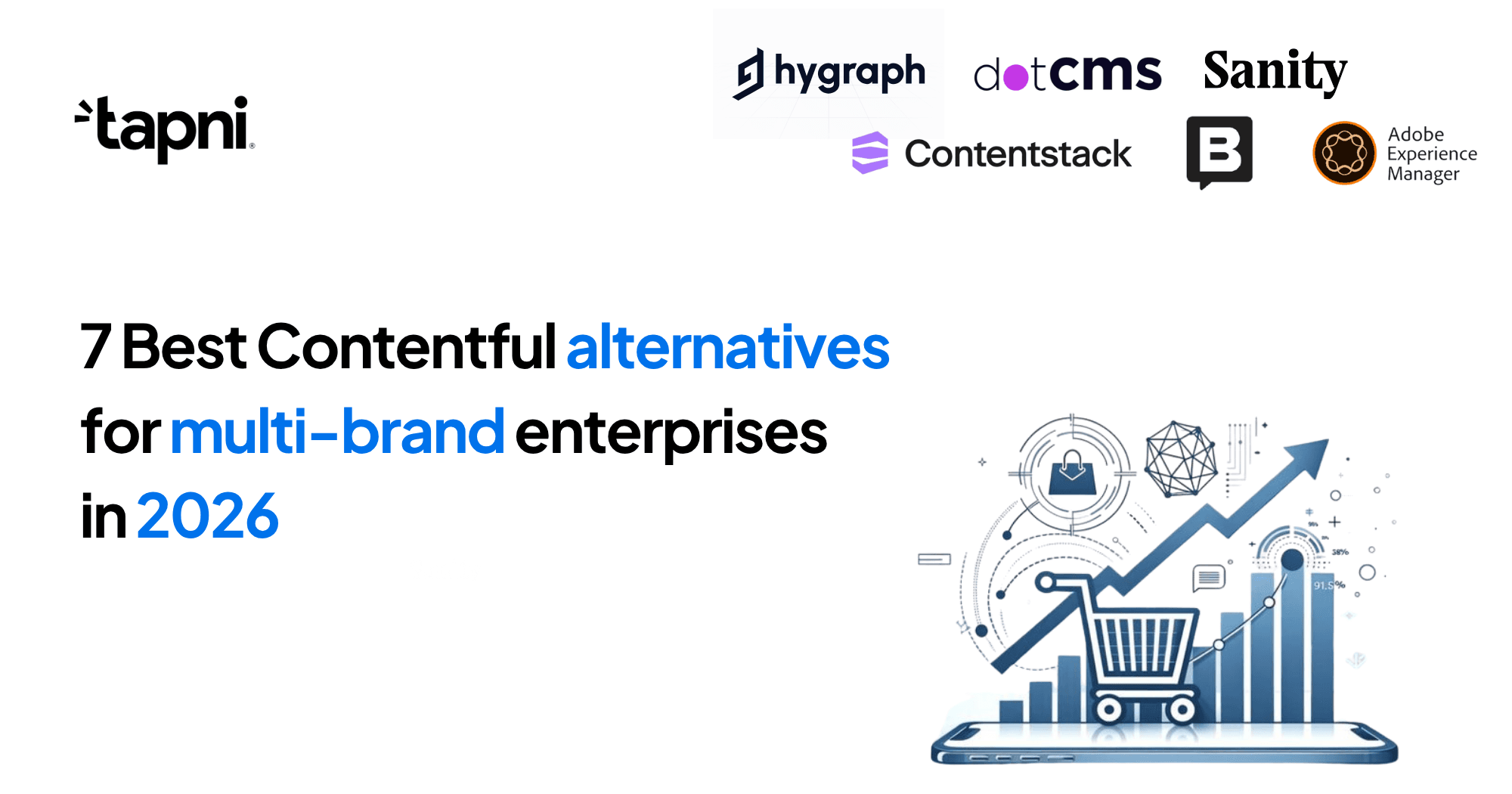
In this article, we'll explore 7 of the best Contentful alternatives for multi-brand enterprises and compare their strengths, ideal use cases, and key features.
Not every CMS is designed to support the complexity of managing multiple brands from a single platform.
While Contentful offers strong content modeling and API-first delivery, organizations with growing brand portfolios may need additional capabilities around governance, localization, content reuse, and personalization.
When evaluating a Contentful alternative, consider the following factors:
Managing multiple brands becomes significantly easier when content operations are centralized.
A suitable CMS should allow teams to oversee content, assets, workflows, and permissions from a single platform while maintaining brand-specific controls where needed.
The ability to share content models, templates, media assets, and reusable content blocks can help reduce duplication and improve consistency across brands.
This becomes especially important for organizations operating across multiple markets or product lines.
Multi-brand enterprises often serve customers in different countries and languages. Look for a CMS that supports localization workflows, translations, and regional content variations without requiring separate content repositories.
Different brands typically have their own teams, approval processes, and publishing requirements.
Granular permissions and customizable workflows help maintain governance while giving teams the autonomy they need.
Content is no longer limited to websites. A modern CMS should support delivery across mobile apps, e-commerce platforms, customer portals, digital business cards, and other digital touchpoints through APIs and structured content.
This ensures that brand information remains consistent wherever customers, partners, or prospects interact with the organization.
As organizations grow, their CMS should be able to support additional brands, regions, and digital properties without requiring major architectural changes.
Integration with analytics, CRM, marketing automation, and e-commerce platforms is also essential for long-term scalability.
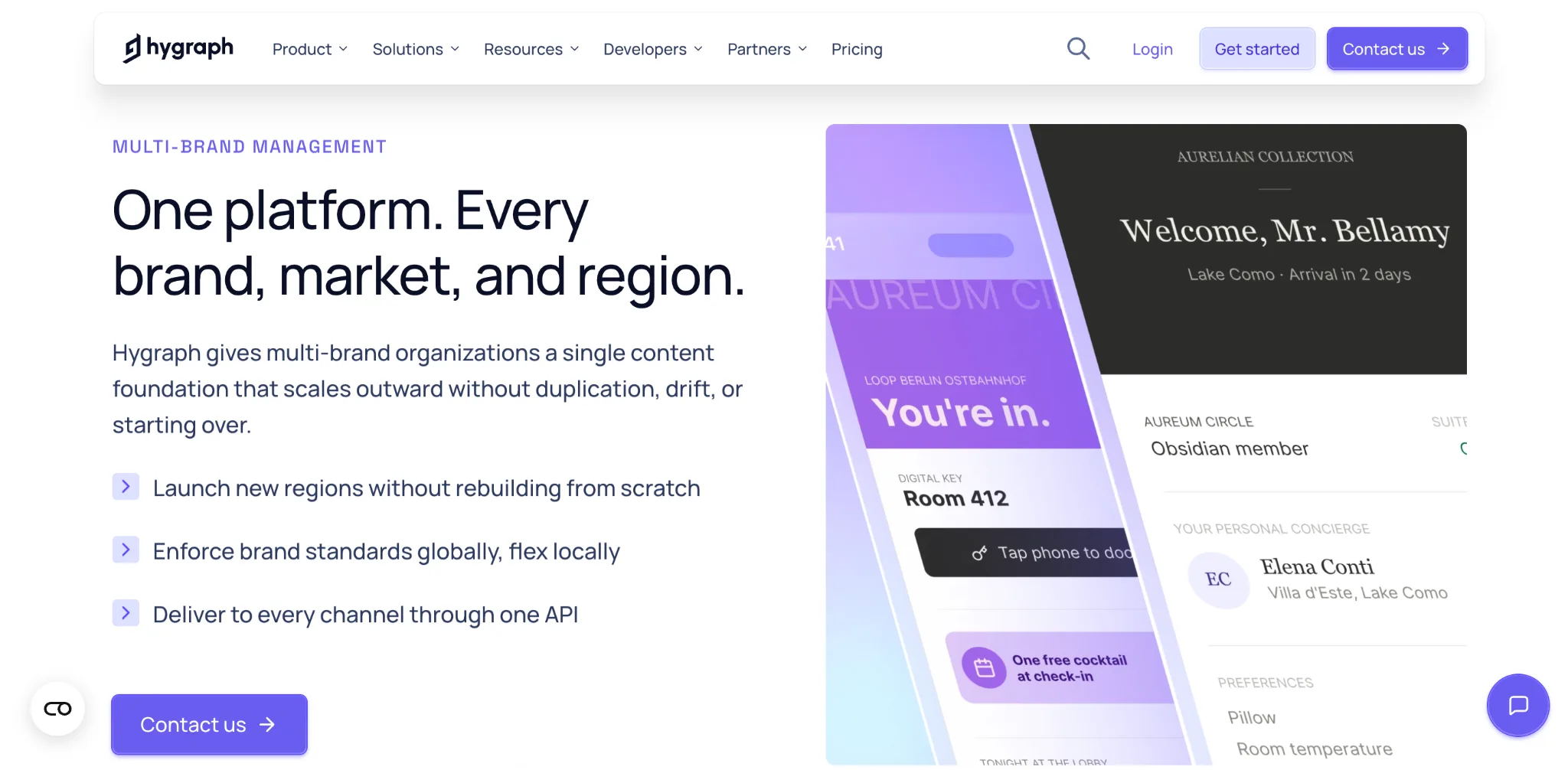
Hygraph is a structured content platform designed for organizations managing multiple brands, regions, and digital properties at scale.
As a CMS for multi-site enterprises, it enables organizations to manage multiple brands from a single content infrastructure while giving each brand its own content space, schema, permissions, and editorial workflows.
This approach helps reduce CMS sprawl, simplify governance, and create a content foundation that can scale as new brands, markets, and channels are added.
Why choose it over Contentful?
While Contentful can support multi-brand environments, Hygraph places multi-brand management at the center of its architecture.
Organizations can consolidate multiple brands onto a single platform without forcing teams into a shared content model.
Each brand maintains schema autonomy while benefiting from centralized governance, shared infrastructure, content federation, and reusable structured content.
This makes Hygraph particularly attractive for enterprises growing through acquisitions, managing large brand portfolios, or looking to reduce the complexity of maintaining separate CMS instances.
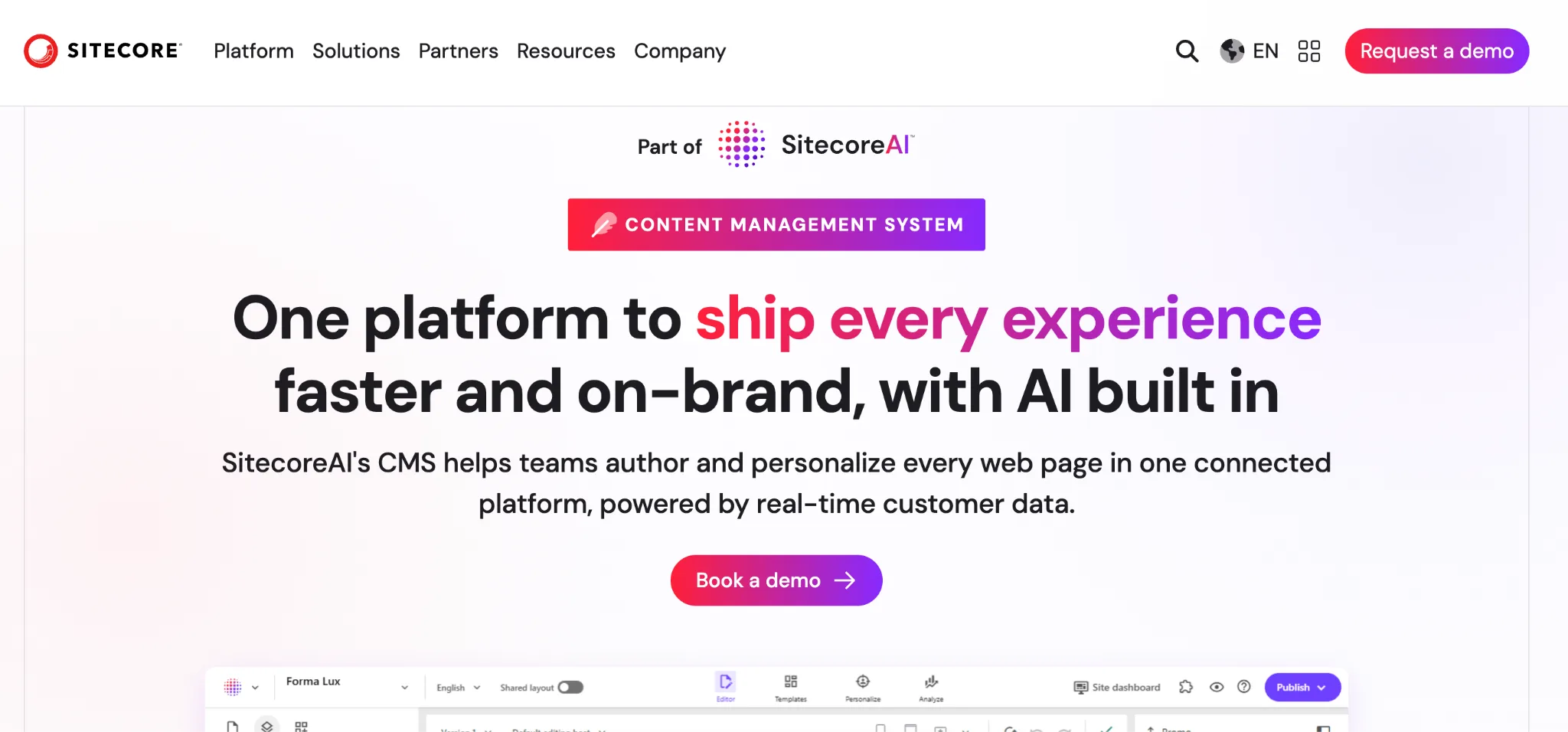
Sitecore is a digital experience platform that enables organizations to manage content, customer interactions, and digital experiences from a centralized platform.
It is widely used by enterprises seeking to unify content operations and customer engagement strategies.
Why choose it over Contentful?
Organizations focused on personalization and customer experience optimization may prefer Sitecore's built-in capabilities.
While Contentful excels as a content platform, Sitecore provides deeper audience segmentation, customer data integration, testing, and personalization features out of the box.
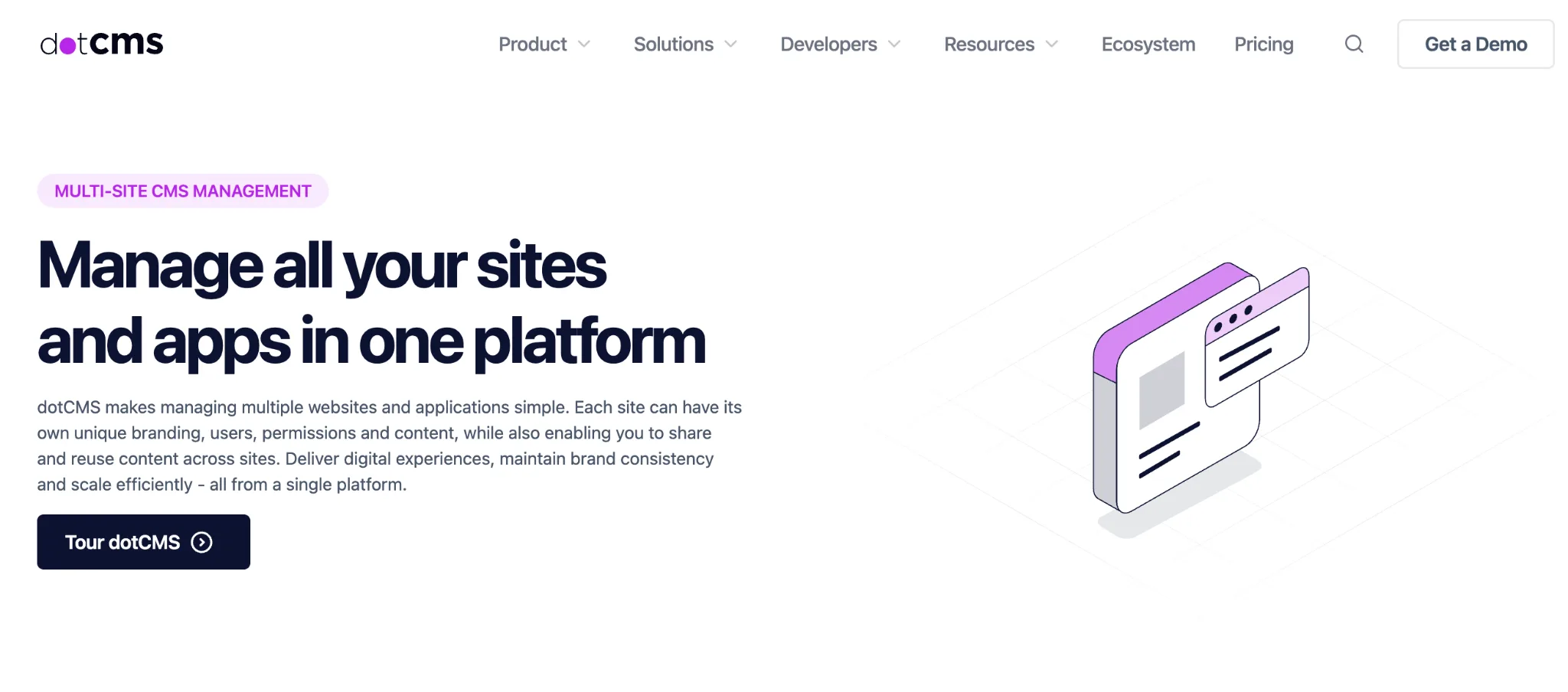
dotCMS is a content management platform that supports both traditional and API-driven content delivery.
It helps organizations manage content across websites, applications, and digital channels while maintaining governance and operational control.
Why choose it over Contentful?
dotCMS offers a hybrid approach that supports both traditional and headless content delivery.
This flexibility can make adoption easier for enterprises transitioning from legacy CMS platforms or those that want to support different delivery models without managing separate systems.
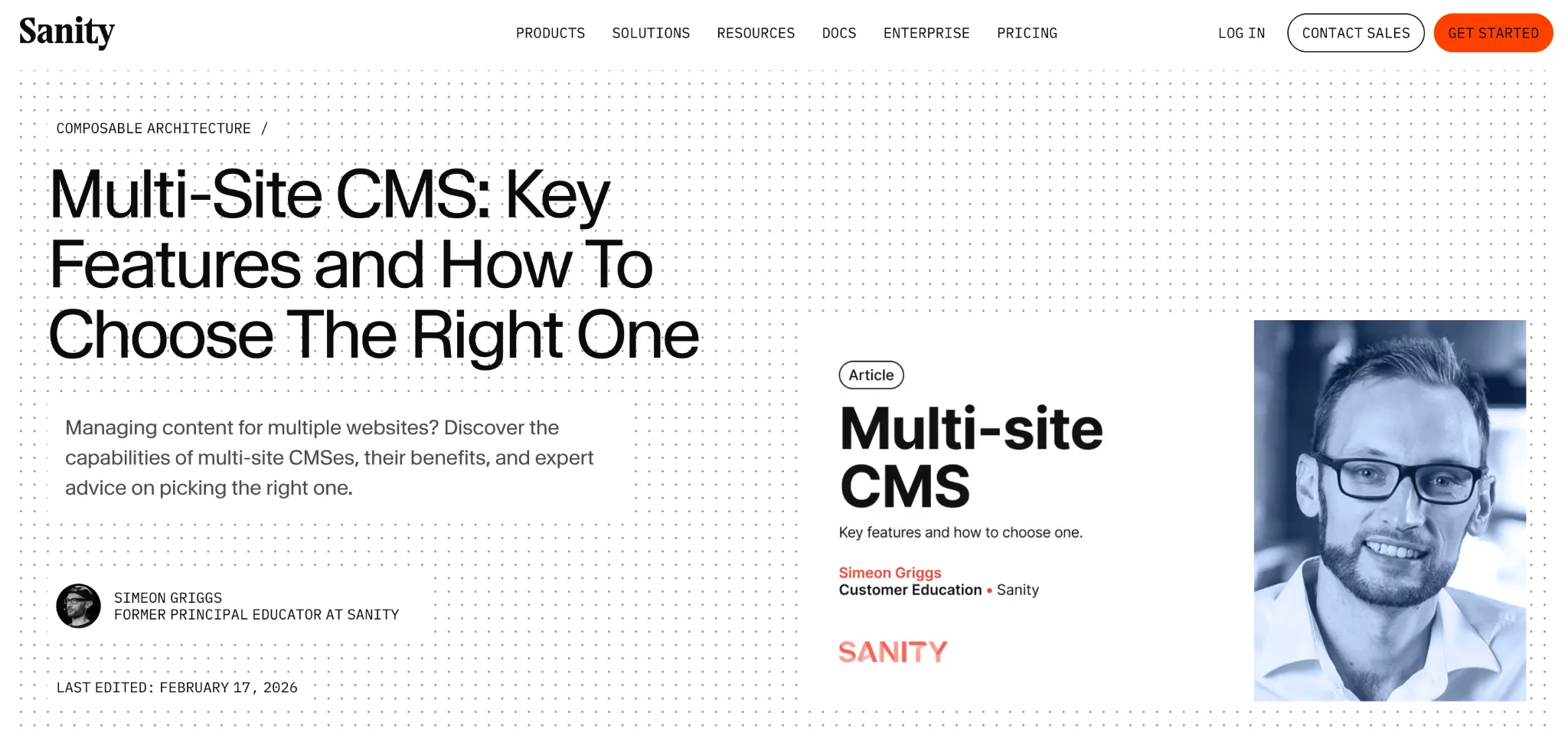
Sanity is a structured content platform that allows teams to create, organize, and distribute content across digital channels.
Its developer-friendly architecture and real-time collaboration capabilities make it a popular choice for organizations building custom digital experiences.
Why choose it over Contentful?
Sanity offers greater flexibility when it comes to customizing the editorial experience.
While Contentful provides a standardized interface, Sanity allows organizations to build tailored content workflows, content models, and editing environments that align with the needs of individual teams and brands.
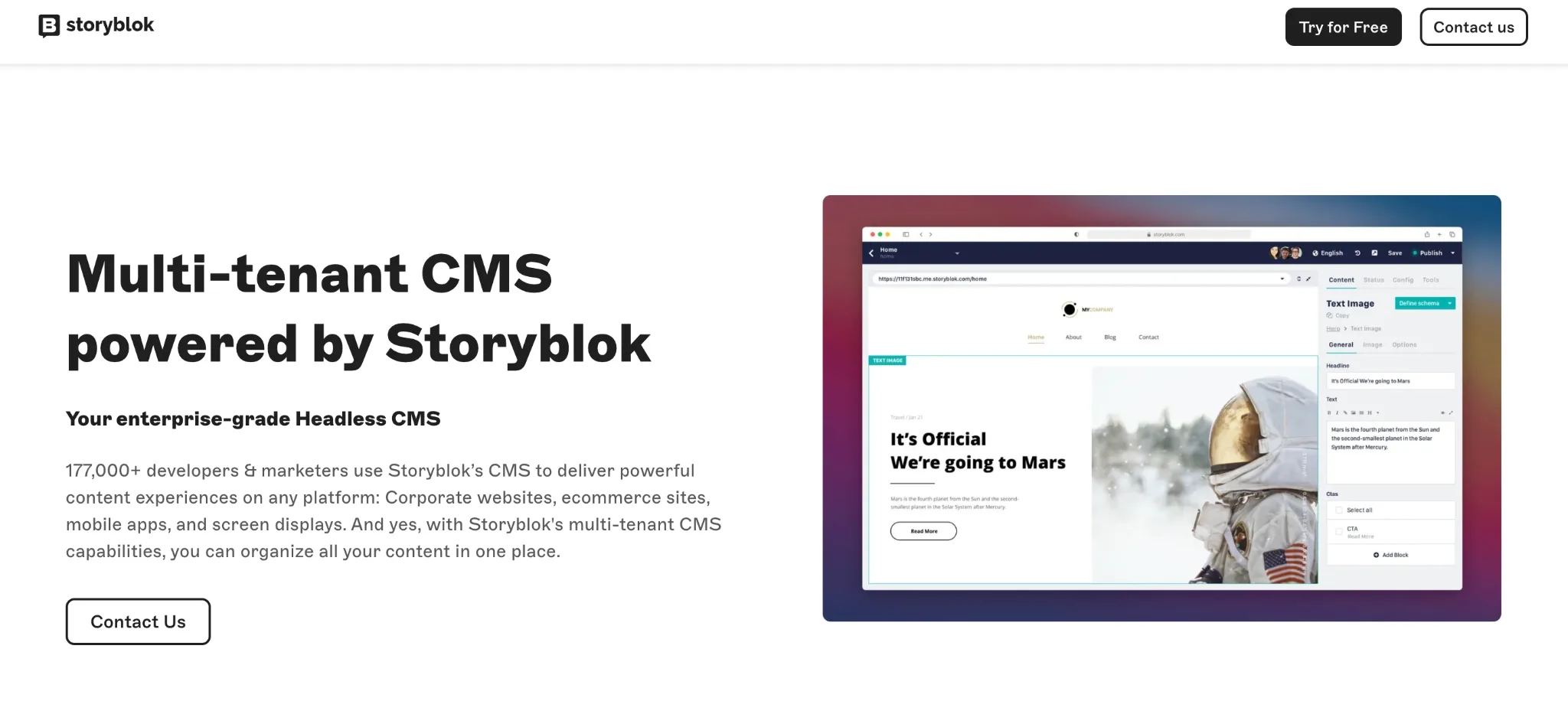
Storyblok is a headless CMS designed to simplify content creation and publishing across digital channels.
Its component-based architecture helps teams create reusable content structures while supporting modern frontend frameworks.
Why choose it over Contentful?
Storyblok's visual editor is often its biggest advantage.
While Contentful relies on a more traditional content editing experience, Storyblok allows teams to preview page layouts and content changes in real time, reducing dependency on developers.
Adobe Experience Manager is an enterprise content management platform that combines content creation, digital asset management, and multisite publishing within a single environment.
It helps large organizations coordinate content operations across global websites and digital properties.
Why choose it over Contentful?
Enterprises that need advanced digital asset management, governance, and customer experience capabilities may find AEM a more comprehensive solution.
While Contentful focuses primarily on content management, AEM combines content operations, asset management, personalization, and analytics within a broader digital experience ecosystem.
Contentstack is an enterprise headless CMS that helps organizations manage and distribute content across websites, applications, and digital experiences.
It is built around a composable architecture that allows teams to integrate best-of-breed technologies into their content stack.
Why choose it over Contentful?
Companies evaluating alternatives often choose Contentstack for its enterprise governance features, workflow automation capabilities, and focus on operational scalability.
Organizations with large content teams and complex approval processes may find their governance and automation tools particularly valuable.
|
Platform |
Best For |
Multi-Brand Support |
Key Advantage Over Contentful |
Pricing |
|
Hygraph |
Multi-brand and multi-site enterprises that need a centralized infrastructure with brand autonomy |
Excellent |
Stronger focus on structured content, content federation, isolated brand spaces, and multi-brand consolidation |
Free plan available; paid plans start at $199/month |
|
Sanity |
Teams that need custom editorial workflows and highly flexible content operations |
High |
More customizable editorial experience through Sanity Studio |
Free plan available; paid plans start at $15/user/month |
|
Adobe Experience Manager (AEM) |
Large enterprises with complex governance, DAM, and personalization needs |
Excellent |
Broader digital experience ecosystem with native asset management and personalization |
Custom pricing |
|
Sitecore |
Enterprises focused on customer experience and personalization |
Excellent |
Stronger built-in personalization, segmentation, and customer data capabilities |
Custom pricing |
|
dotCMS |
Organizations that want both traditional and headless CMS flexibility |
High |
Hybrid CMS model that supports multiple delivery approaches |
Free Community Edition; enterprise pricing available |
|
Storyblok |
Marketing teams that need visual editing and live preview |
High |
More marketer-friendly visual editing experience |
Free plan available; paid plans start at €99/month |
|
Contentstack |
Enterprises building composable digital experience platforms |
High |
Strong governance, workflow automation, and enterprise-scale content operations |
Custom pricing |
Choosing the right Contentful alternative depends on why Contentful may not fully meet your organization's needs.
For multi-brand enterprises, the decision usually comes down to governance, content reuse, localization, personalization, and how much flexibility each brand team requires.
Start by looking at how your brands are structured. If each brand has its own website, content model, workflow, and regional requirements, you need a CMS that can support brand autonomy without creating disconnected silos.
Platforms like Hygraph, AEM, Sitecore, and dotCMS are especially relevant for organizations managing multiple brands or markets from a centralized environment.
Multi-brand enterprises often need to reuse product information, legal copy, campaign assets, templates, and media across different websites or regions.
If content reuse is a major priority, look for a platform with structured content models, reusable components, and strong content relationships.
Some teams need a standardized content interface, while others need highly customized workflows.
Sanity may be a good fit if your teams need a fully tailored editorial environment, while Storyblok may be better if marketers need visual editing and live preview.
As the number of brands, teams, and regions grows, governance becomes more important. Look for granular permissions, approval workflows, audit controls, and role-based access. This is especially important for regulated industries or enterprises managing content across multiple markets.
If personalization is a major business goal, evaluate whether you need native personalization features or whether you prefer to connect a CMS with external personalization tools.
AEM and Sitecore offer strong built-in personalization, while headless platforms such as Hygraph, Sanity, Storyblok, and Contentstack support personalization through a composable architecture.
The best CMS should support your content needs today and your expansion plans tomorrow.
Consider whether the platform can handle new brands, acquisitions, regional websites, languages, integrations, and channels without forcing a costly migration later.
Contentful remains a popular choice for enterprise content management, but it is far from the only option available.
As organizations expand across brands, regions, and digital channels, their requirements often evolve beyond basic content delivery to include governance, localization, content reuse, personalization, and scalable content operations.
The platforms featured in this list take different approaches to solving these challenges.
Some prioritize structured content and composable architectures, while others focus on personalization, visual editing, governance, or multisite management.
The right choice depends on your organization's goals, technical requirements, and the complexity of your brand portfolio.
Before making a decision, take the time to evaluate how each platform supports your content workflows, integration needs, and long-term growth plans.
A CMS is a foundational part of your digital infrastructure, and choosing the right one can help create a more scalable, efficient, and consistent content operation across every brand and channel.